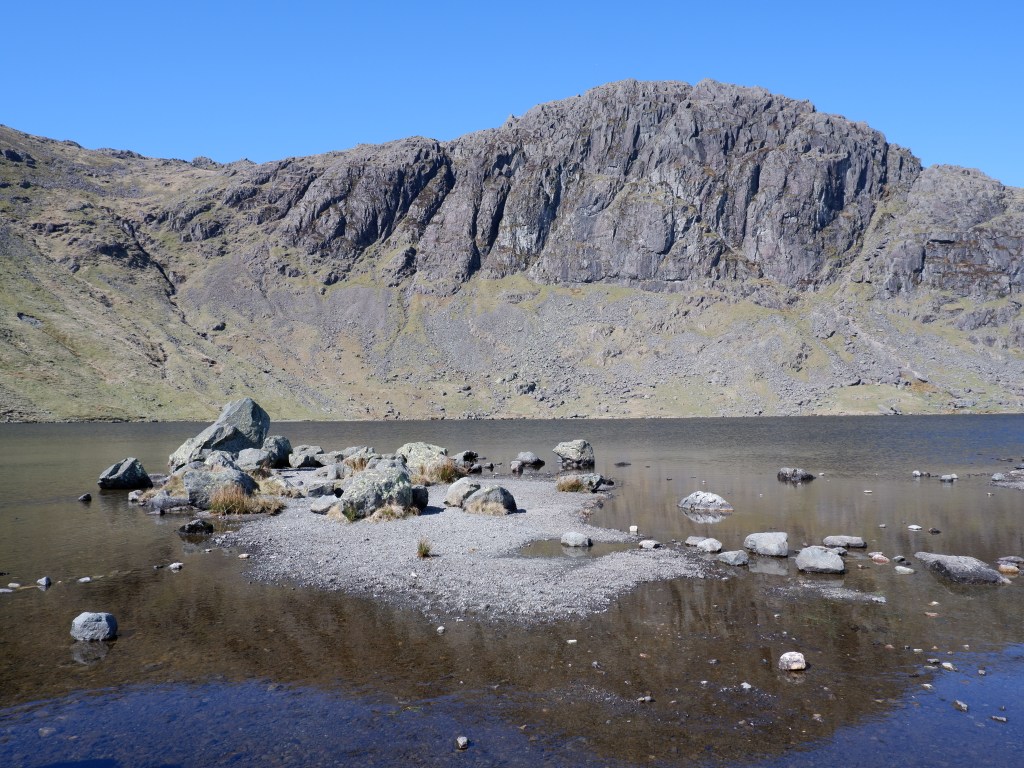
My second commission for the art publication Corridor8 took me to the Lake District to a pair of exhibitions currently on display at Allan Bank in Grasmere – a Georgian villa where Wordsworth once lived, and Samuel Taylor Coleridge occasionally stayed. The exhibitions provided an excuse to finally spend some time in the Lake District; the opening weekend coincided with the beginnings of the flush of deliriously good spring weather we’ve had this year. We stayed in Rydal, just south of Grasmere, where the last of the daffodils in Dora Wordsworth’s field were being joined by the first of the bluebells and the pesto-perfume of the wild garlic. On our most adventurous day of walking we ascended Dungeon Ghyll to Stickle Tarn, and then looped on and up past the lake to tackle the craggy, lunar terrain of the Langdale Pikes.
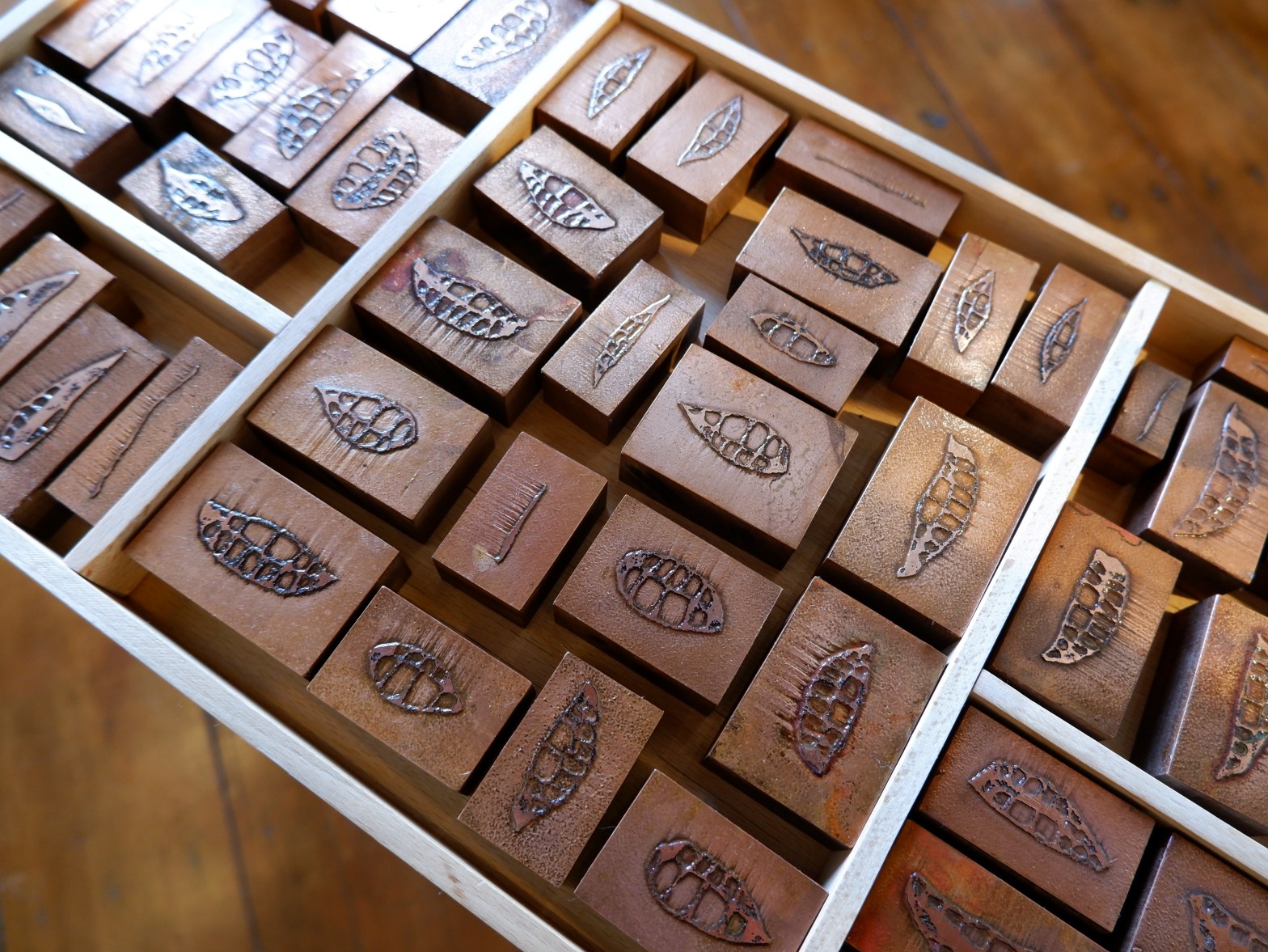
When I read about the two, interconnected exhibitions ahead of the trip, I felt like I couldn’t have been given a better commission. The first show ‘Women in Print: The Caravan Press’ tells the story of Gwyneth Alban Davis, a little known printmaker who lived in the creative community of the Lake District in the 1940s, while the second, Heather Mullender-Ross’s ‘All the Better to Hear you With’, draws on the creative legacy of Alban Davis and other artists in the Lake District to explore bird-song and its translation into language. Both exhibitions were archival – either presenting and reactivating documents, printing presses and printing blocks, from the archive, or documenting a response to the resonance of these archival materials for expanded printmaking now.
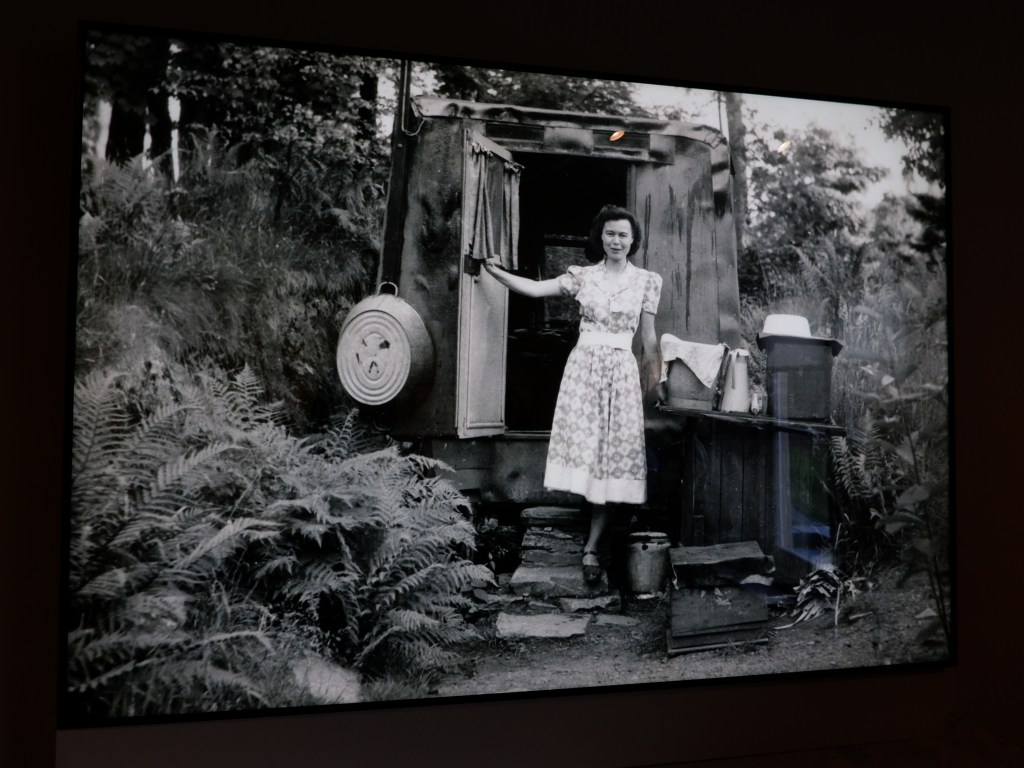
I’m fascinated and more than a little infatuated with the archive, in all its physical, abstract and metaphorical manifestations, and I’m especially interested in how we can use the archive to bring back into view the creative lives of women who were not the well-known starry geniuses (who now draw crowds to National Trust sites). I loved learning about Gwyneth Alban Davis, and it was especially interesting to encounter her through the practice of Heather Mullender-Ross, who had been working to retrace and recover her story over a number of years. Here’s one of the blown-up lightbox photographs of Gwyneth Alban Davis from the exhibition:
Anyway, I feel like I’m danger of writing a whole other review of this show here, so instead I’ll send you over to Corridor8’s website to read the official piece. Here’s a little quote from the piece too, in case you need further temptation:
Precarity and contingency, as well as the resilience required to make art in the face of such conditions, are some of the themes that unite the exhibitions at Allan Bank. Mullender-Ross notes that the wooden trolleys of ‘All the Better to Hear You With’, although fixed to the floor for this exhibition, are on wheels and mobile like Alban Davis’s caravan. The width of the installation is also a nod to Gwyneth, and perhaps to the site-specific collage Schwitters made in response to her caravan and its ingenuity, as it matches the width of a cupboard in the original caravan. The exhibitions ask us to consider what kinds of space and resources are needed to make art in times of crisis, whether personal, political or environmental.

 Francesca Brooks