Pleasures of reading

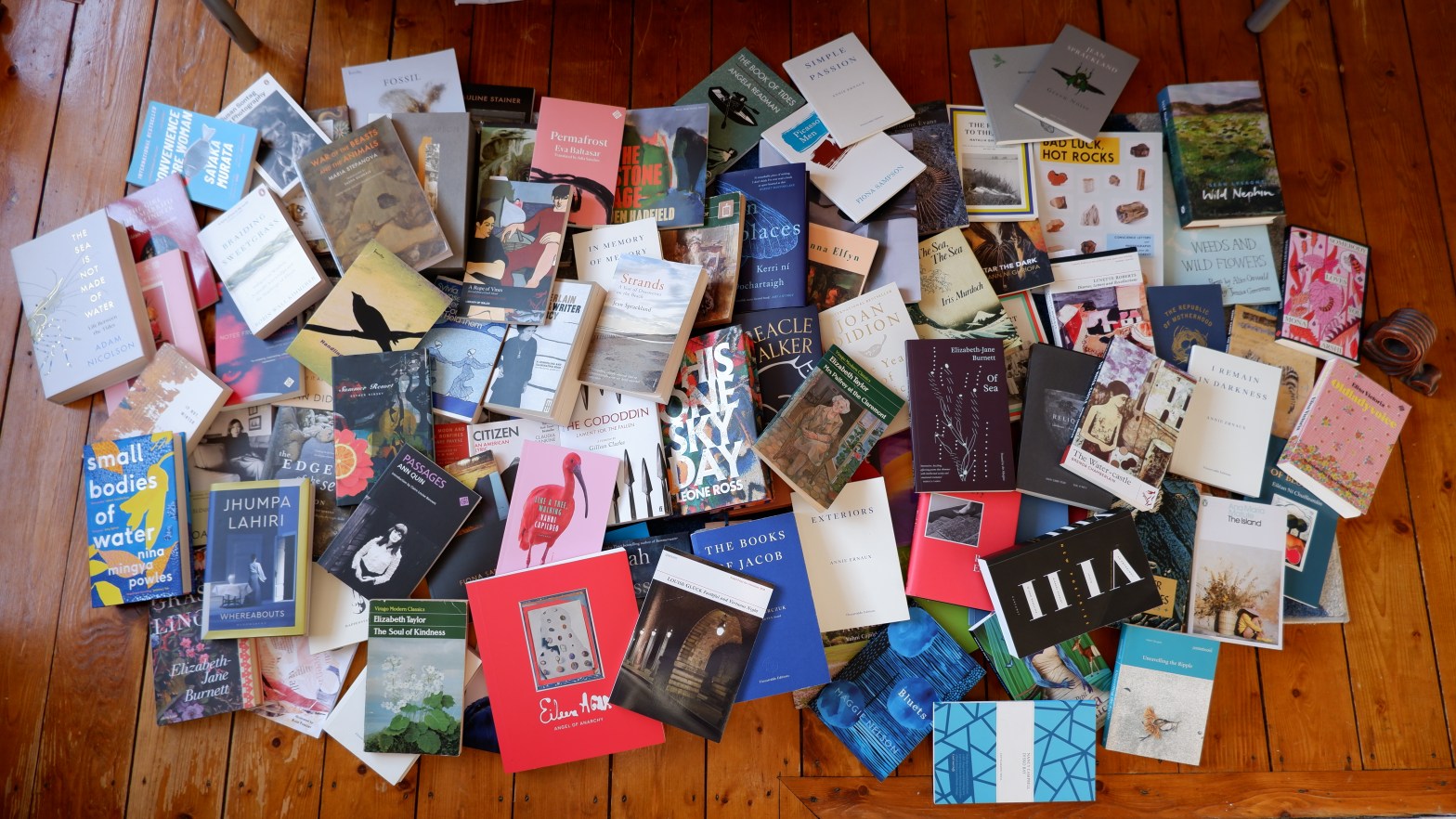
For the past four years I have kept a record of my favourite books of the year. Partly inspired by the bookstagrammers of instagram, I’ve posted a picture of a stack of my favourite books from each year since 2017. It’s an interesting way to reflect on the character of the year, the ideas and imagined places which I was reaching for when I turned to the little worlds bound on my bookshelf in search of escape and retreat.
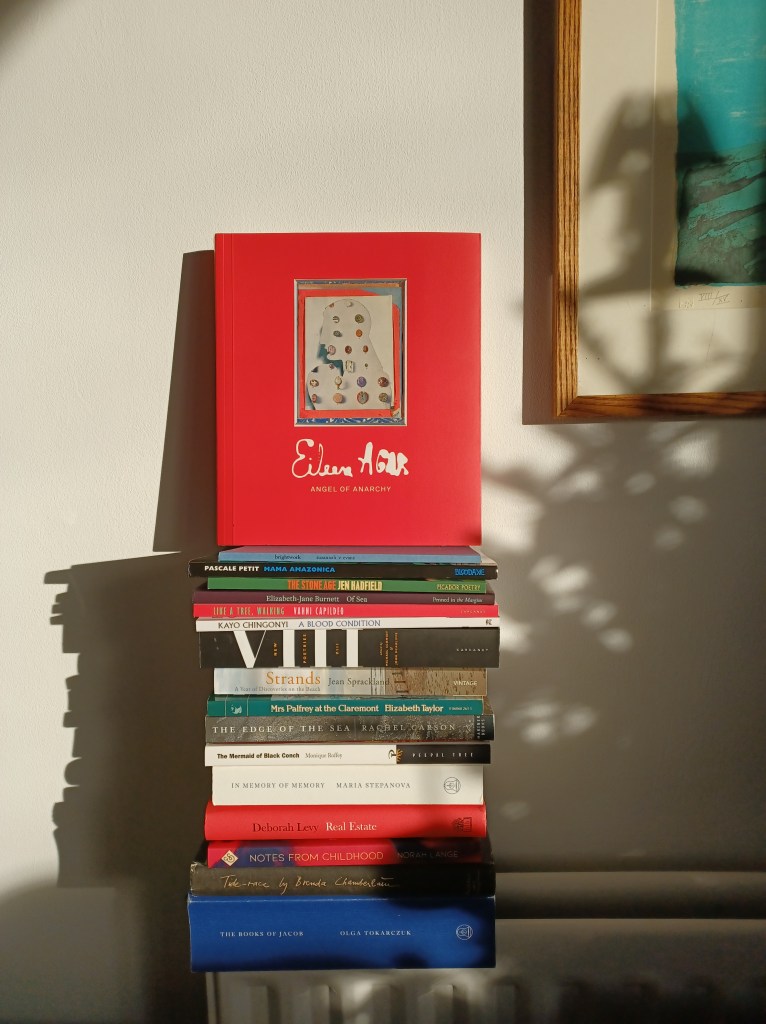
My favourite books of 2021 (listed below)

One of the things I have learnt over the years is how much my reading is driven by mood. Realising this has helped me to feel more relaxed about the ways in which my reading habits are constantly transforming over time. Certain books find you at the perfect moment, while others languish a while waiting for you to be ready for them. Sometimes all I want to do is read, during afternoons on the sofa, before bed, and on journeys, and sometimes all I want to do is binge some tv and spend my time finishing a jigsaw puzzle!

During the pandemic my approach to reading poetry collections completely changed: suddenly all I wanted to do was devour poetry books. Before this I had never been an especially good reader of the poetry books I had collected. Sometimes I read them cover to cover, but more often I would start a book, put it down, and ‘fail’ over and over again to return to finish it. In the early pandemic I picked up my poetry books much more frequently, first thing in the morning, or at lunch and after work, and I started marking little pencil stars in the contents list so that I could easily find my way back to those poems that had moved or amazed me. And along the way, I learnt how to be a better reader of poetry.

Here is my book list from last year, just in case you are looking for a recommendation and, as you’ll see, my current reading habits and mood mean that it is dominated by poetry books and non-fiction.

My favourite books of 2021

Poetry:

Suzannah V. Evans, Brightwork (Guillemot Press)

Pascale Petit, Mama Amazonica (Bloodaxe)

Jen Hadfield, The Stone Age (Picador)

Elizabeth-Jane Burnett, Of Sea (Penned in the Margins)

Vahni Capildeo, Like a Tree, Walking (Carcanet)

Kayo Chingonyi, A Blood Condition (Cape)

New Poetries VIII (Carcanet)

Non-fiction:

Jean Sprackland, Strands: A Year of Discoveries on the Beach

Brenda Chamberlain, Tide-race (the subject of my current research, but also a dream memoir about life on Bardsey Island)

Rachel Carson, The Edge of the Sea

Maria Stepanova, In Memory of Memory, trans., Sasha Dugdale

Deborah Levy, Real Estate

Norah Lange, Notes from Childhood, trans., Charlotte Whittle

Eileen Agar: Angel of Anarchy

Fiction:

Elizabeth Taylor, Mrs Palfrey at the Claremont

Monique Roffey, The Mermaid of Black Conch

Olga Tokarczuk, The Books of Jacob, trans., Jennifer Croft
Parisian Rain and Parakeet Feathers

I had two poems published just before the end of 2021, which I thought it might be worth saying a little about here on the blog.

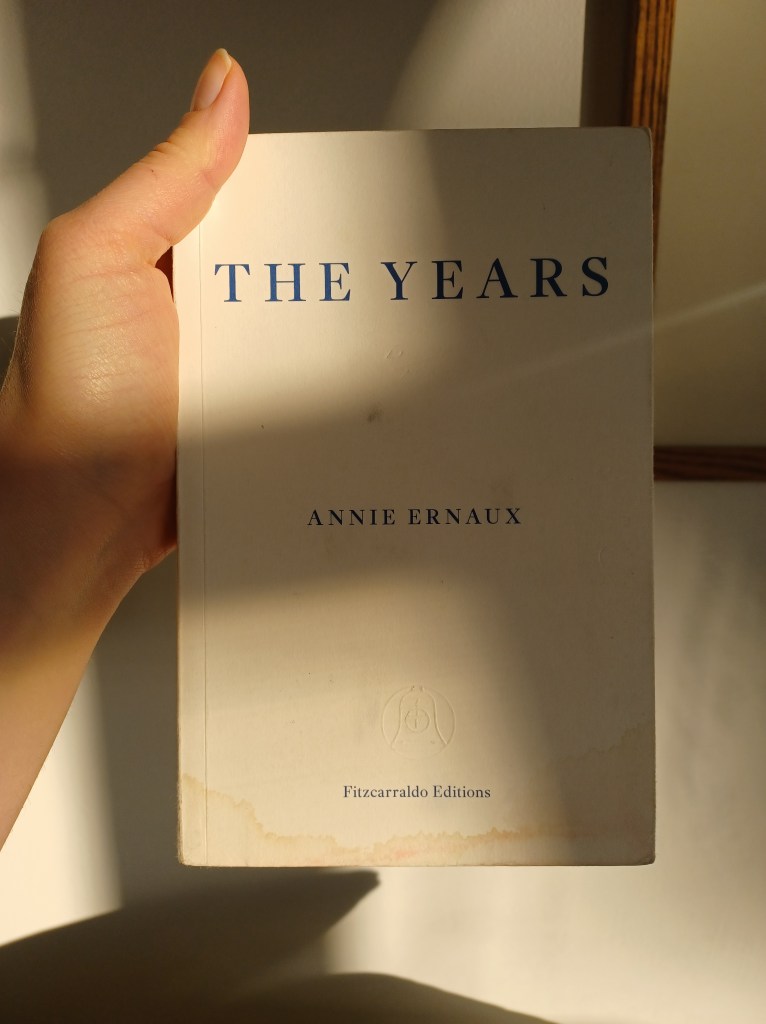
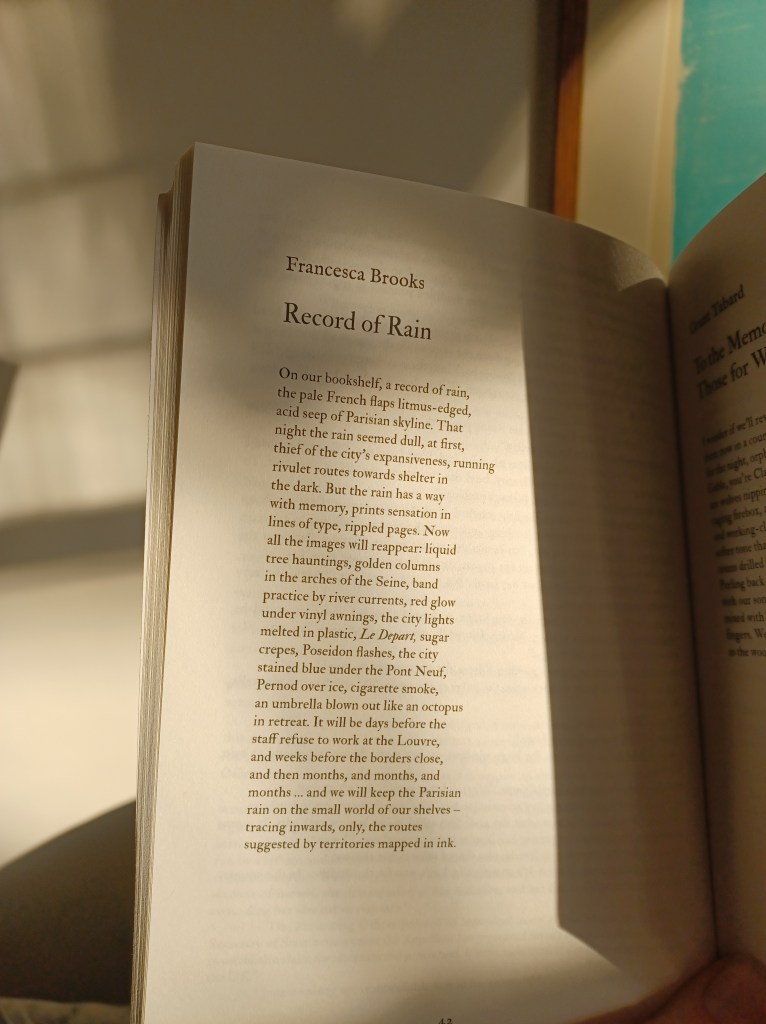
The first poem is in the wonderful Lighthouse Journal’s 23rd issue of poetry and short fiction, which you can purchase a copy of here. The poem, ‘Record of Rain’, begins with a rain-soaked copy of Annie Ernaux’s The Years (translated by Tanya Leslie) and the memories of Paris it provokes and preserves.

The launch is taking place online tonight at 7.30pm (GMT), just in case you happen to see this and want to join. It will be the first time I read my poems aloud for an audience.

The second poem is available to read online in Issue 9 of Tentacular Mag. ‘The Parakeet Feather of the Great North Wood’ rails against the city we moved away from in September 2020 and its toxic air.

Tentacular is a really interesting poetry magazine. Each writer is encouraged to stretch out one tentacle towards another contribution in the magazine (I chose Sasha Dugdale’s incredible ‘Philanthropy’ from Issue 7) and a second outwards into the web, towards some context.

Someone warns you/ that the blackberries are fume-dusted and rat-nibbled/ and you think of the long soak, hard water marbling/

purple, of sugar boiling the burst juices until the point/ of metamorphosis

‘The Parakeet Feather of The Great North Wood’
The picture is of a parakeet feather resting on the trunk of a tree.

‘Love Letters of the Hampstead Modernists’ & other poems

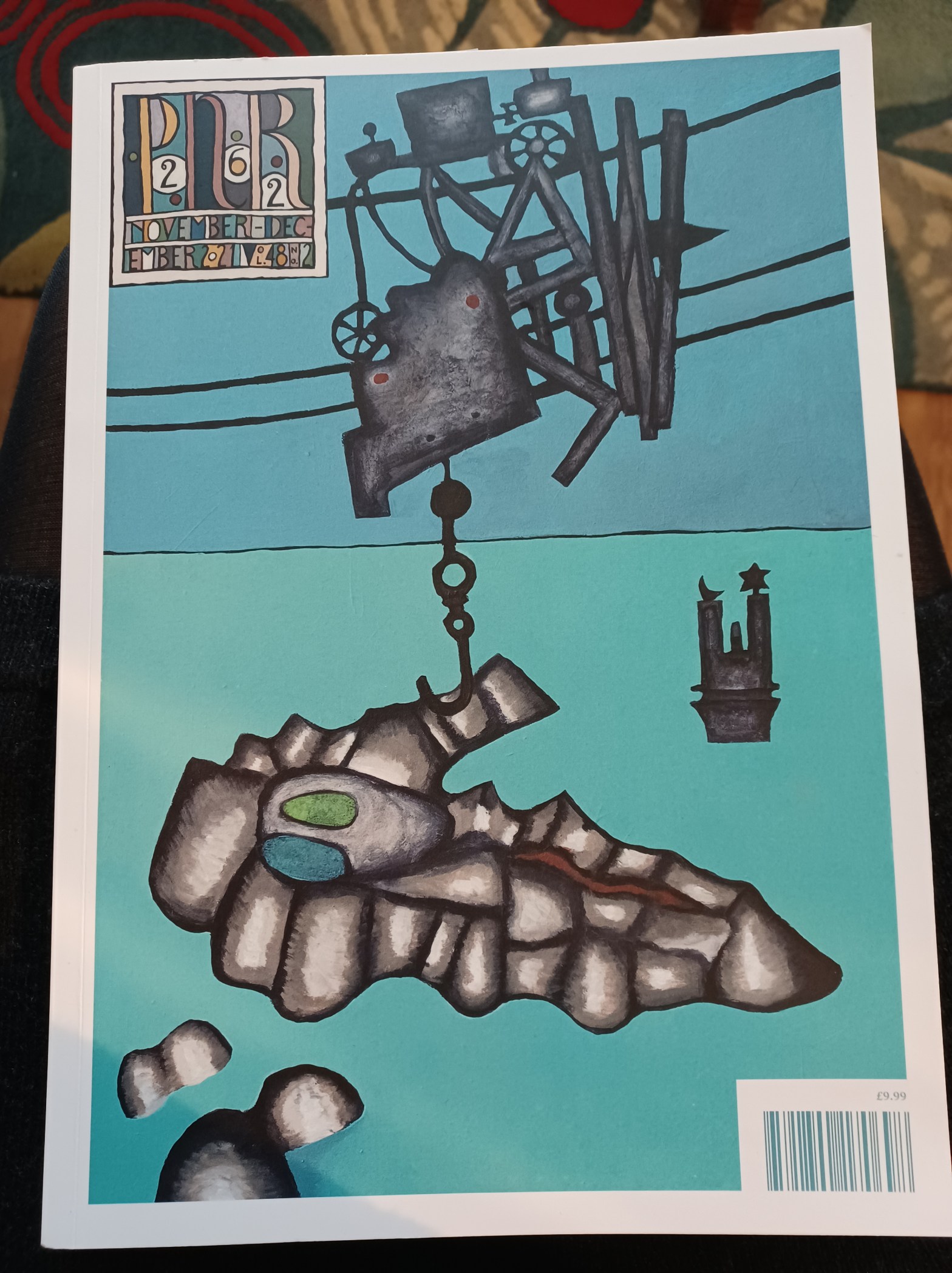
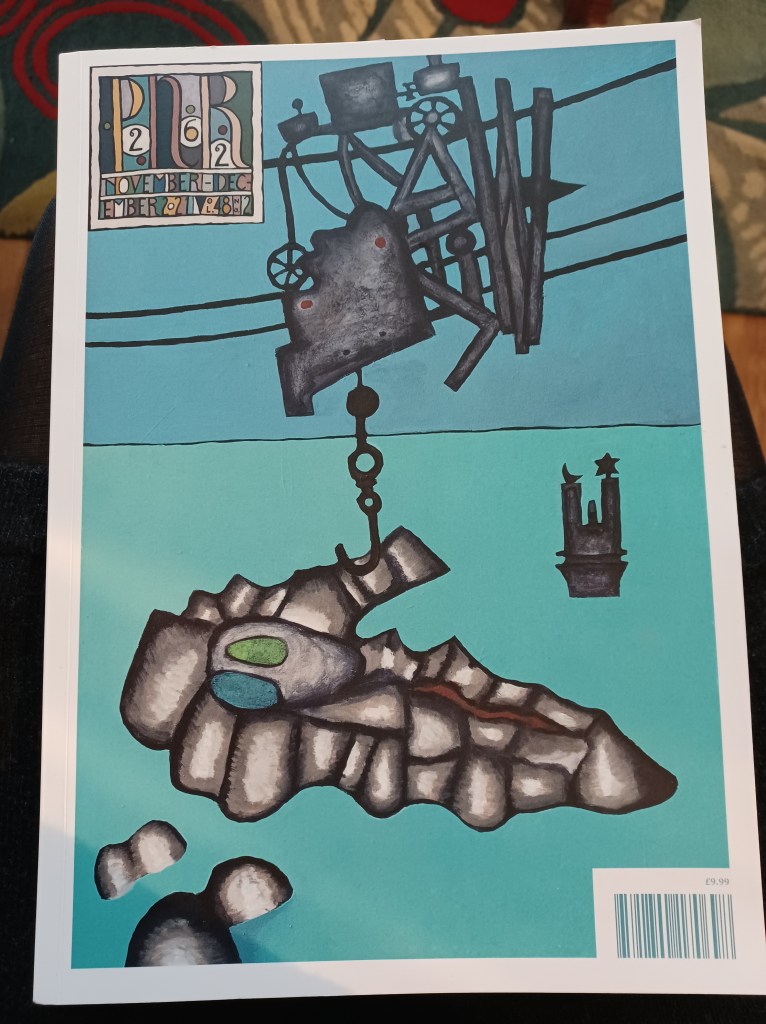
Picture of a copy of PN Review 262

Four of my poems have been published in issue 262 of PN Review. I’ve admired the journal and much of what Carcanet publishes for a long time, so this feels like something of a dream.

If you’re a subscriber, you can read the poems online here. Otherwise you can purchase a copy of the journal from Carcanet’s online shop.

I thought I would say a little something here about the creative debts of each of the poems.

The first of the poems, ‘Love letters of the Hampstead Modernists’, was written after reading Caroline Maclean’s Circles and Squares and is a surreal collage of love letters between the artists Barbara Hepworth and Ben Nicholson, and Eileen Agar and Paul Nash.

Love

you are pebble-headed

and starfish-mouthed,

dark as a lick of brine

and pocket-smoothed.

Love Letters of the Hampstead Modernists
Sculpture consisting of a shell stuck on top of sea urchin mounted on a base made out of woven bark Eileen Agar 1899-1991 Bequeathed to Tate Archive by Eileen Agar, 1992.
Image shows a man standing with the Puddingstone at Standon

‘Hertfordshire Puddingstone’ is the second poem. This came out of an incredible workshop led by the poet Liz Berry for Dialect Writers. I would definitely recommend looking for events and workshops run by them in the future.

The poem is named after a particular type of conglomerate sedimentary rock found only in the county where I grew up, Hertfordshire, and draws on a number of other local legends and histories.

The third poem is written for the oak outside the window of our former Sydenham flat, which was felled by the neighbours. ‘The Oak is Down’ is written after Charlotte Mew’s ‘The Trees are Down’ and I’m very grateful to a former UCL English student who introduced me to this poem.

The final poem ‘A Legend for Hazel’, is written for my niece.

In the garden all that’s left is a fingerprint

of unvarnished oak, a tall wound of mud

and moss where its shadow once stretched,

The Oak is Down
Photograph of the Oak Tree outside the window before it was felled.