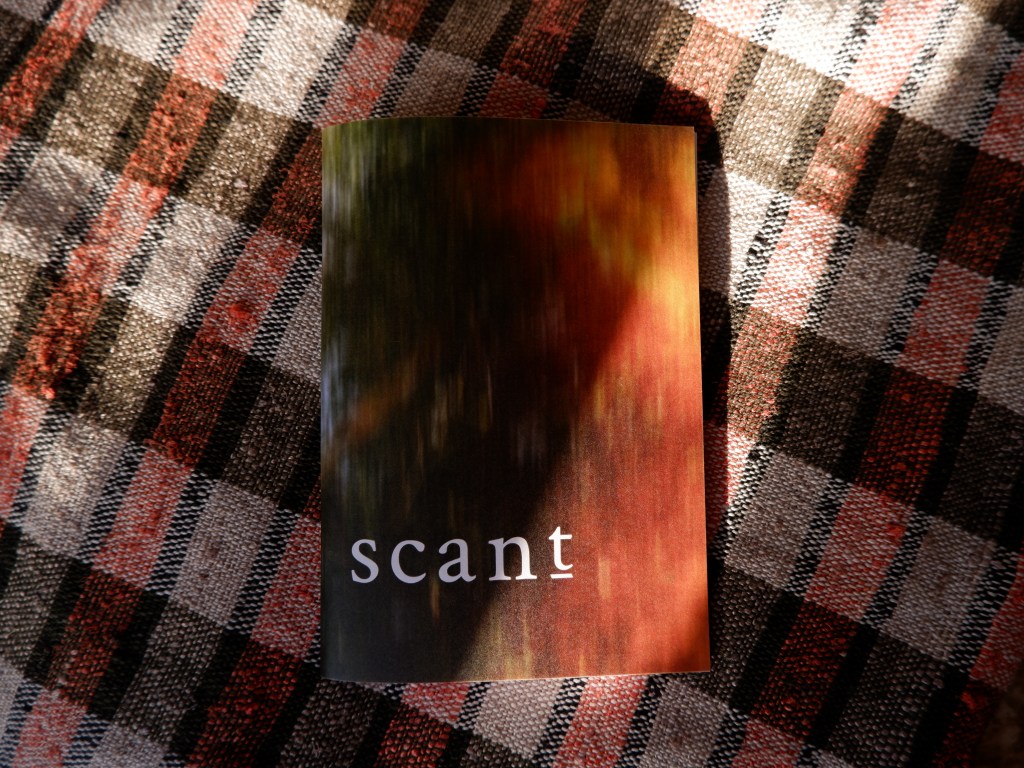
This post is going up a little later than planned. Back in January Scant launched its first issue with an exhibition of work from the magazine at Saan Gallery in Manchester. The magazine brings together poetry and photography that responds to the scantness and transience of our present time: a moment of ecological deterioration and destruction, and of economic and cultural precarity. I have a poem, ‘In Anticipation of the Flood’, and a series of linked photographs published in the first issue, alongside brilliant poetry by Tom Branfoot, Joey Frances, and Purbasha Roy, amongst others, and arresting images from Lucy Ridges, Natasha Javadine, and Sarah Russell (to name just some of the photographers).
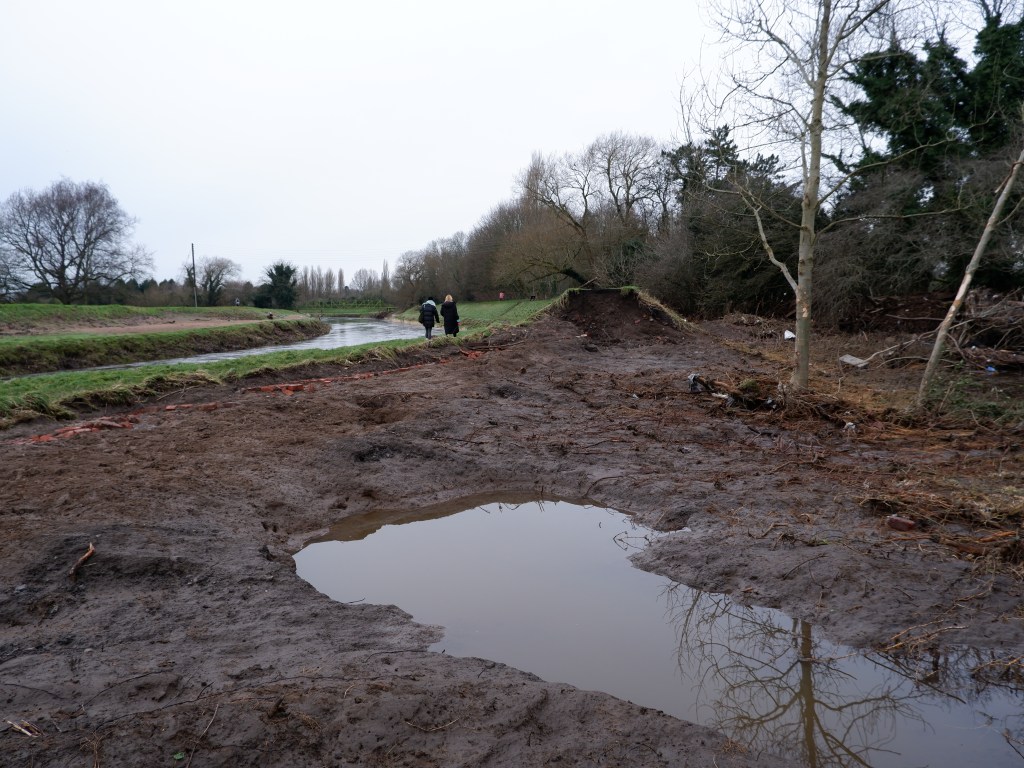
A picture of flood damage in Didsbury where the River Mersey punched a hole in the high river path and forged a new route through the allotments and Rugby Club.
In a strange, haunting moment of synchronicity, the publication of Scant and my images (poetic and photographic) of flood and its polluted aftermath, coincided with a new wave of floods in Didsbury where I live. On New Year’s Day the river Mersey rose in a powerful torrent, more quickly and fiercely than anyone had anticipated. As well as flooding homes and carrying away parked cars (a devastating start to the year for many), it punched a yawing hole in the high path above the river – ripping trees up by their roots, swamping allotments, rugby pitches, and golf courses, and forging a new route for itself through the city.
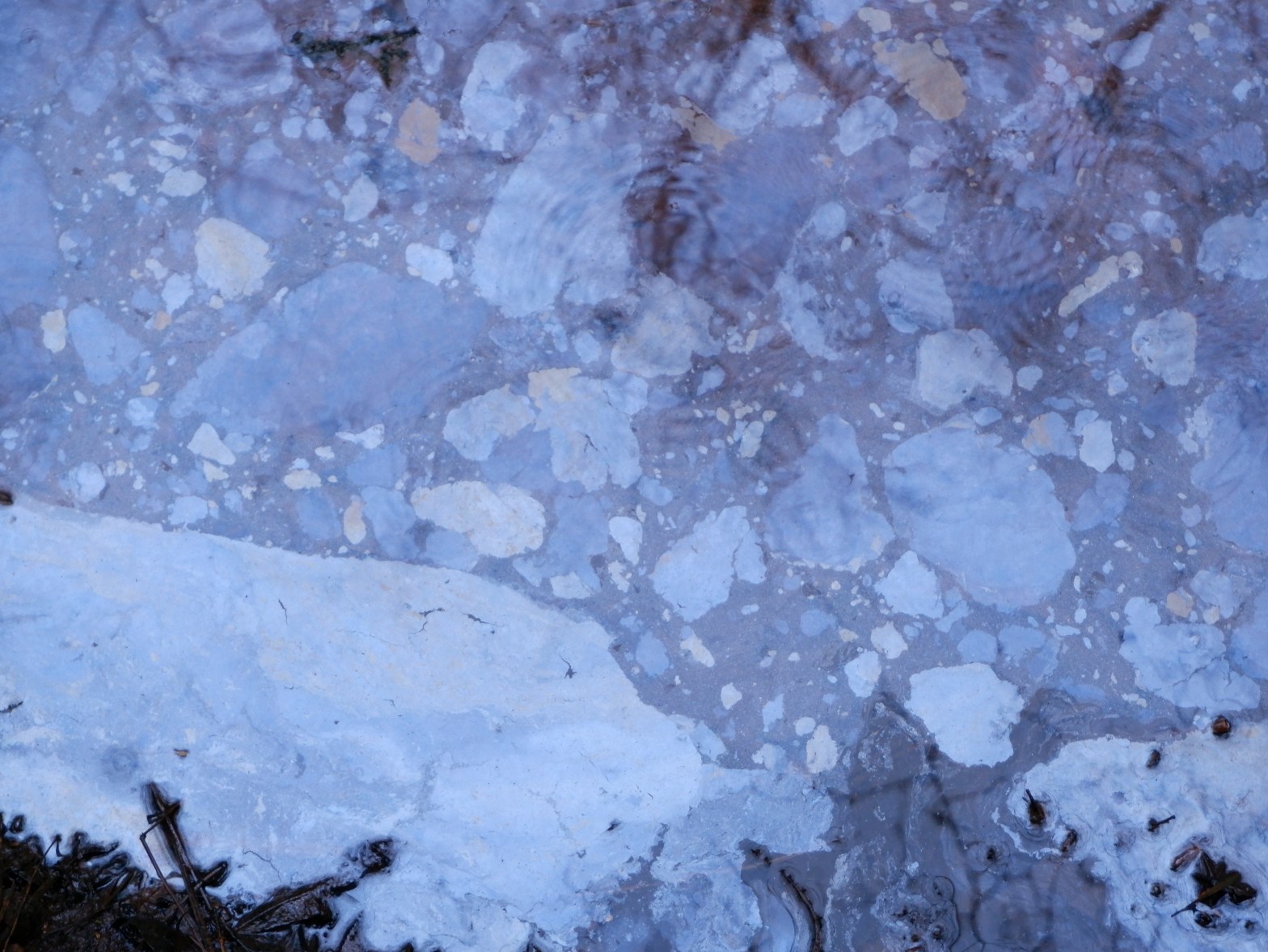
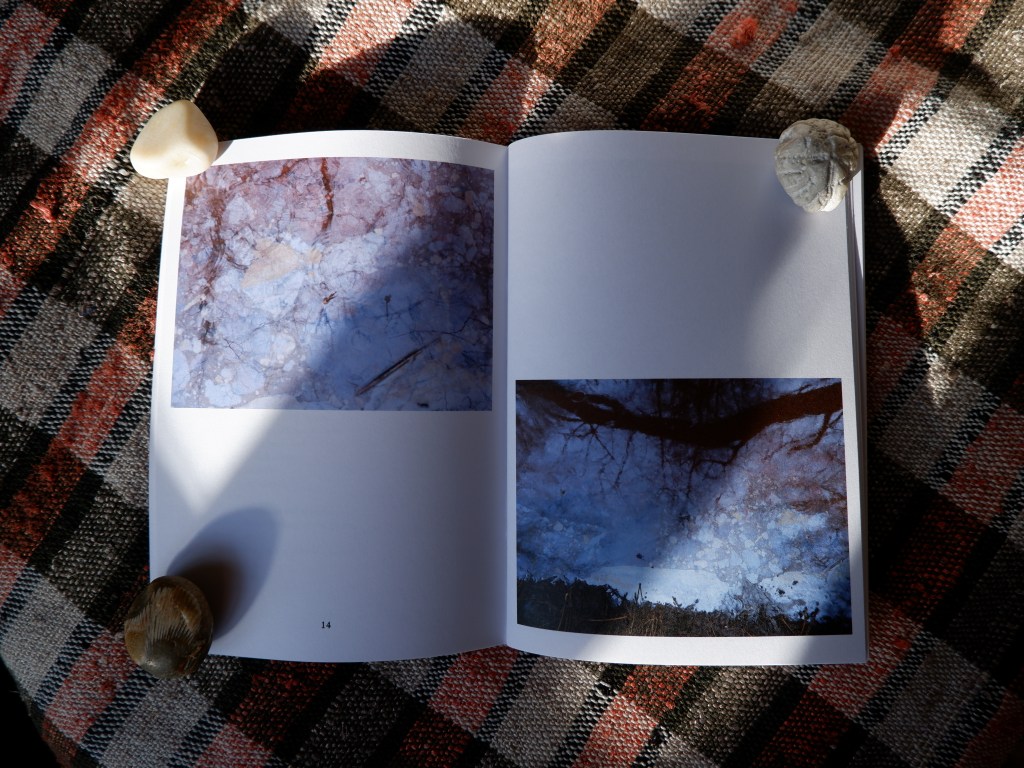
When people’s homes have been damaged, this might seem like the least of a community’s worries. But when the Mersey floods, the plains around Fletcher Moss also become marked by the shameful detritus of our polluting lives, which usually lies hidden at the bottom of the river bed. The branches of trees become garlanded with plastic bags, Tampax and dog poo bags (like unholy, inverted Clootie trees), and the paths are littered with plastic containers, rusted bicycle wheels, and other discarded, household items. My poem and photograph series for Scant explore the attraction and repulsion of the stagnant water of the flooded park, its surface coated with shimmering oil slicks.
My photographs of polluted patterns in the water, as published in Scant
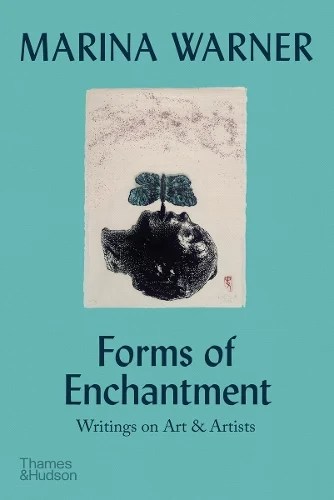
Earlier this year I was in a unfamiliar city for an interview for a job I was sure I wasn’t going to get. In the way I often do, I wandered into a bookshop in search of something like comfort – a new world into which I might retreat as I tried to forget the interview and let go of my anxiety about the wait for a decision. The book I chose was Marina Warner’s Forms of Enchantment, a collected volume of Warner’s sublime and fanciful writings on art and artists.
Back when I was in my early twenties Warner was a hero of mine. I loved fairy stories, folk tales, and their re-imaginings, I was obsessed with the art of Paula Rego, with exploring ideas of mythmaking and feminism. And, as I was testing out ideas about who I might become and what I might do with my life, I spent a lot of evenings and weekends writing art reviews in the lonely city I had recently moved to.
Cover of Marina Warner’s Forms of Enchantment
In the preface to her book Warner writes that she wishes to ‘argue for writerly ways of exploring art, as developed in literary tradition’. She goes on to argue that:
‘When I write about artworks and the artists who made them, I try to unite my imagination with theirs in an act of absorption that corresponds to the intrinsic pleasure of looking at art. Since the Greeks, ekphrasis has offered a way of capturing visual experience in words – but while I believe in close looking, description is not enough. I like to explore above all the range of allusions to stories and symbols; not to pin down the artwork as if it were a thesis or a piece of code, but to touch the springs of the work’s power. Art writing at its most useful should share in the dynamism, fluidity and passions of the objects of its inquiry.’ (pp. 8-9)
I love that phrase – ‘to touch the spring’s of the work’s power’ – because it suggests the liveliness of the work of art, its dynamic status as something still in process, as a thing with a resonance and agency all its own, waiting to meet the mind that extends towards it. Reading Warner’s collected art writings felt comforting and nostalgic: these words were familiar treasure ranging across subjects as diverse as Hieronymus Bosch, Tacita Dean, Helen Chadwick and Sigmar Polke. But in reading Warner’s work I also felt something like regret, or perhaps it was even jealousy: a slightly existential feeling of paths taken and those diverted from. Although I recognised the pleasure conveyed in Warner’s words, they seemed to more readily apply to my relationship with literary texts in my recent critical and academic writings: close reading rather than close looking. I remembered the pleasure of writing about art as an ‘act of absorption’, as Warner describes it, but it was a distant memory. I had a vision of myself in my early twenties on assignment for The Hackney Citizen, wandering the streets and galleries of east London and filing copy from coffee shops. Once upon a time I’d interviewed Conrad Ventur for Garageland magazine, reviewed shows by Georgia Hayes and art festivals in Aldeburgh, and even written catalogue essays for galleries in Berlin. What had I lost or left behind when I stopped doing this kind of writing?
All of this is a circuitous, expanded way of saying that when Corridor8 asked me to review an exhibition for their brilliant online publication, I leapt at the chance. Back in October I caught the train to Preston as the damp, warm, grey air was burnt to a blaze of blue by the autumn sun, to review ‘The Pearls and the Oyster’ at the Birley Studios. You can read the review I wrote about the show here.
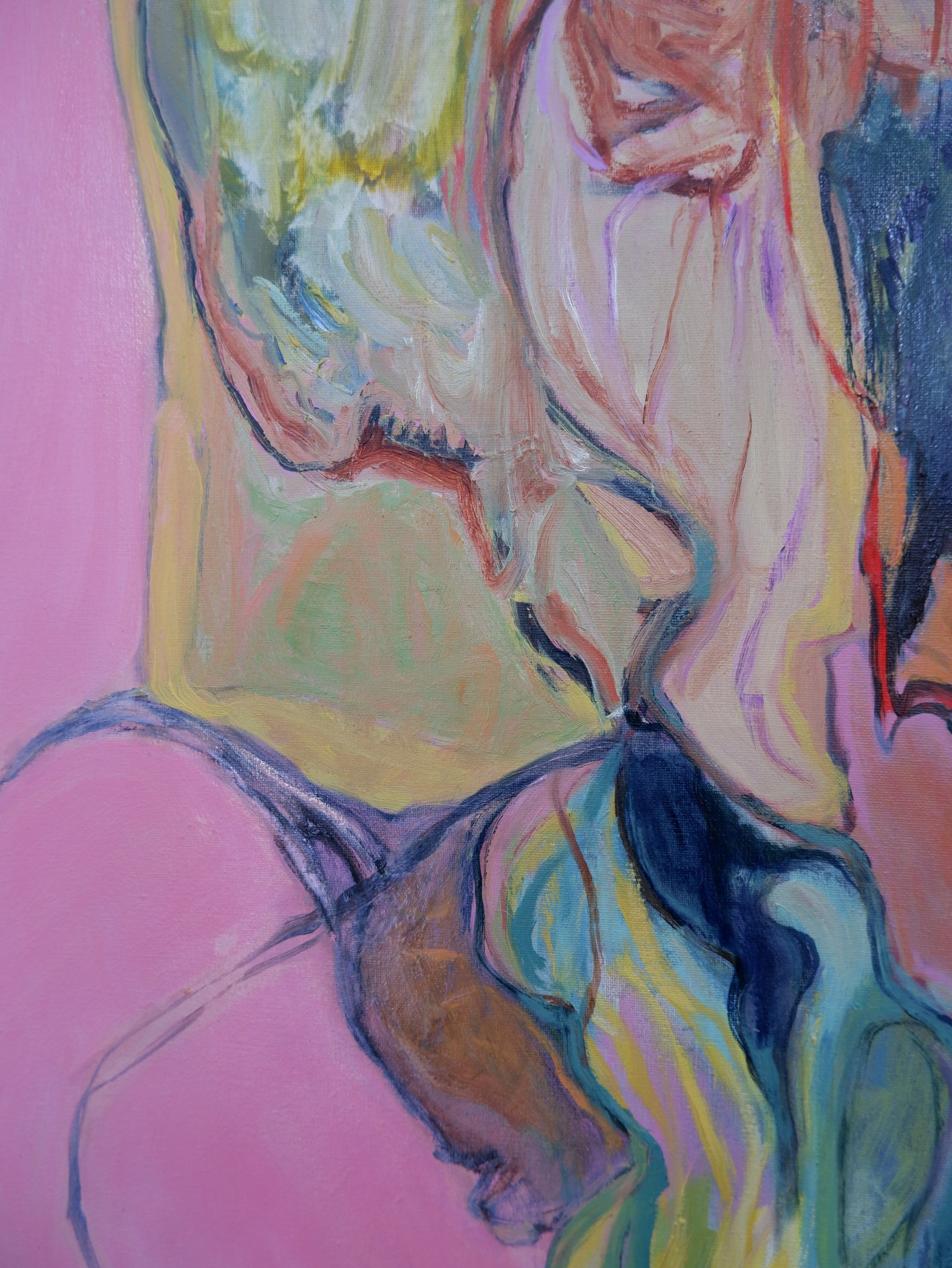
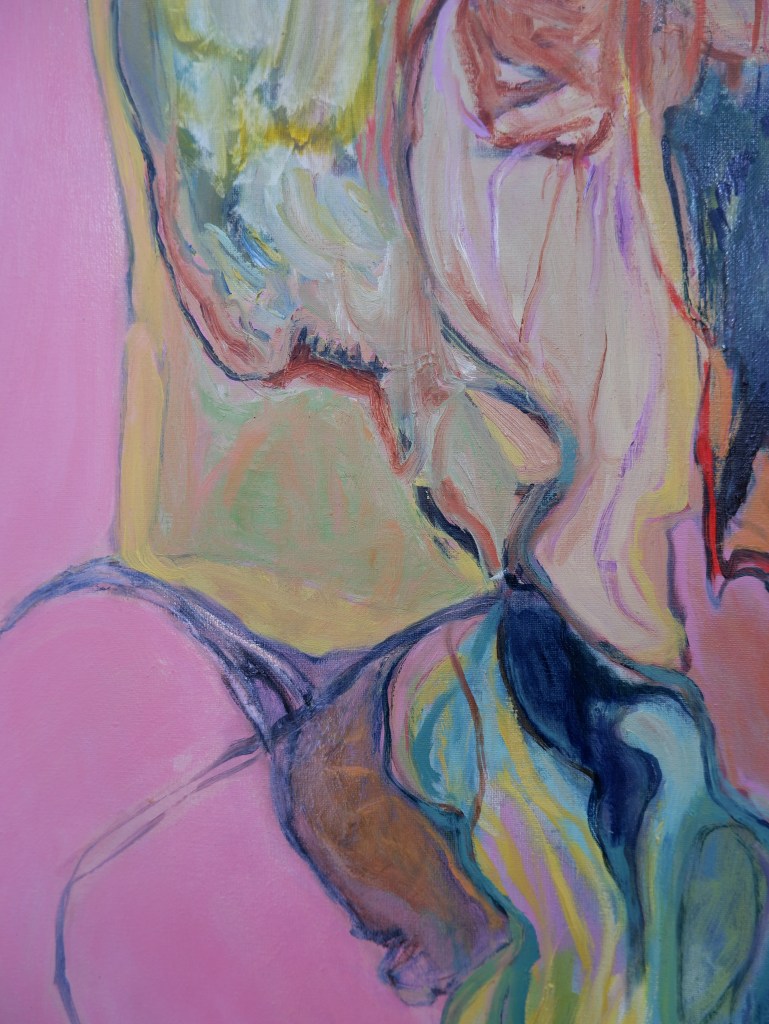
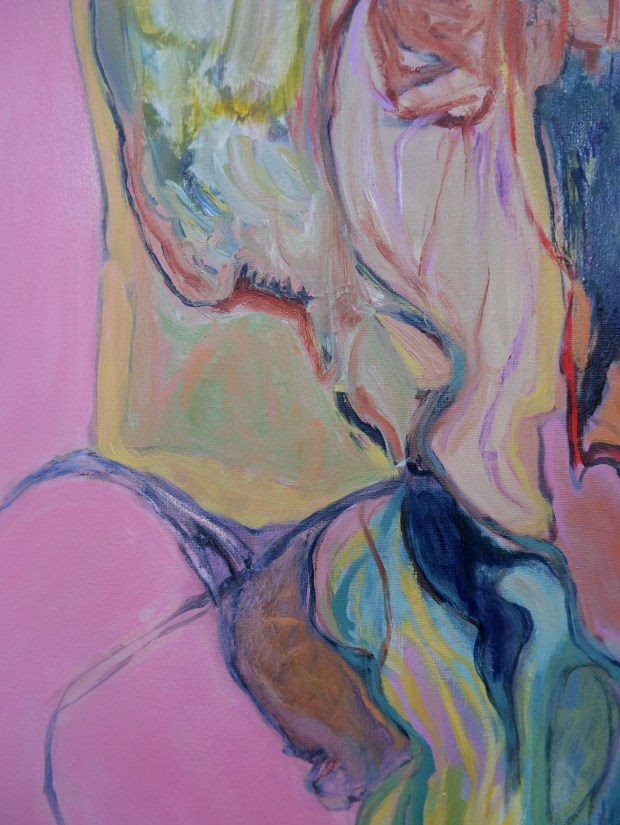
Detail of Nancy Collantine’s painting ‘Parafantasia’ (2024)
I bought a new notebook on the way in, chatted with the curator Jayne Simpson in the sun-filled gallery, and spent a very long time absorbed in the worlds of each of the thirteen paintings of this group show, making notes and wondering where this act of close looking might take me.
I’m just getting warmed up and hope I might have the chance to do something similar again:
What I enjoyed most about this exhibition was the opportunity to look closely and to see where that looking might take me. The ventilation shafts of the tunnels under the Mersey in Liverpool can have a surreal, space-age quality to them, but Payne’s ‘Shaft 1’ (2019), spray-painted with oil on concrete, brilliantly emphasises their dilapidated mundanity. The photo-realist quality of Payne’s work is challenged by an interest in the texture and characteristics of both medium and subject. Paint chipped or scraped from the surface of her concrete canvas replicates (or replaces) the peeling paintwork of the building depicted; the bubbling of paint in the muted sky might give us the sense that we are really looking at the concrete surface of Shaft 1 and not a depiction of it. Where does the painting end and the world begin? At the other end of the spectrum is Nancy Collantine’s ‘Para-Fantasia’ (2024), a painting whose abstract voluptuousness resists any attempt to find definitive signs in the cascade of colour, line and pattern that tumbles down the canvas over a tectonic plane of pink. Sometimes I think I catch a figure, a face, a landscape, and then the painting seems to rearrange itself again before my eyes.
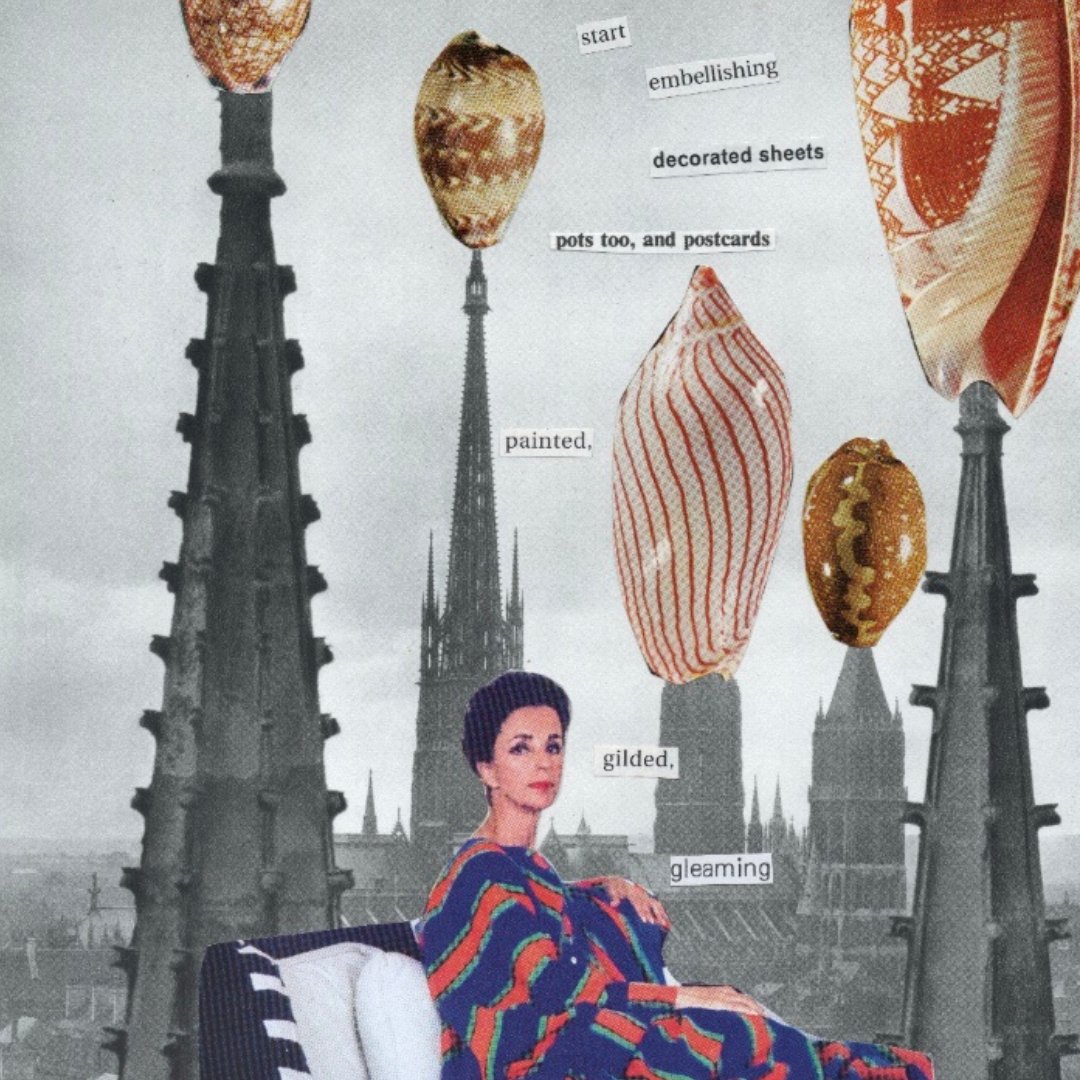
I’ve continued to experiment with the playful, irreverent and sometimes associative relationship between word and image in ‘collage poems’. The process of making them can be brief and impulsive, but often extends over a long period of time, and might be seen as an iterative process.
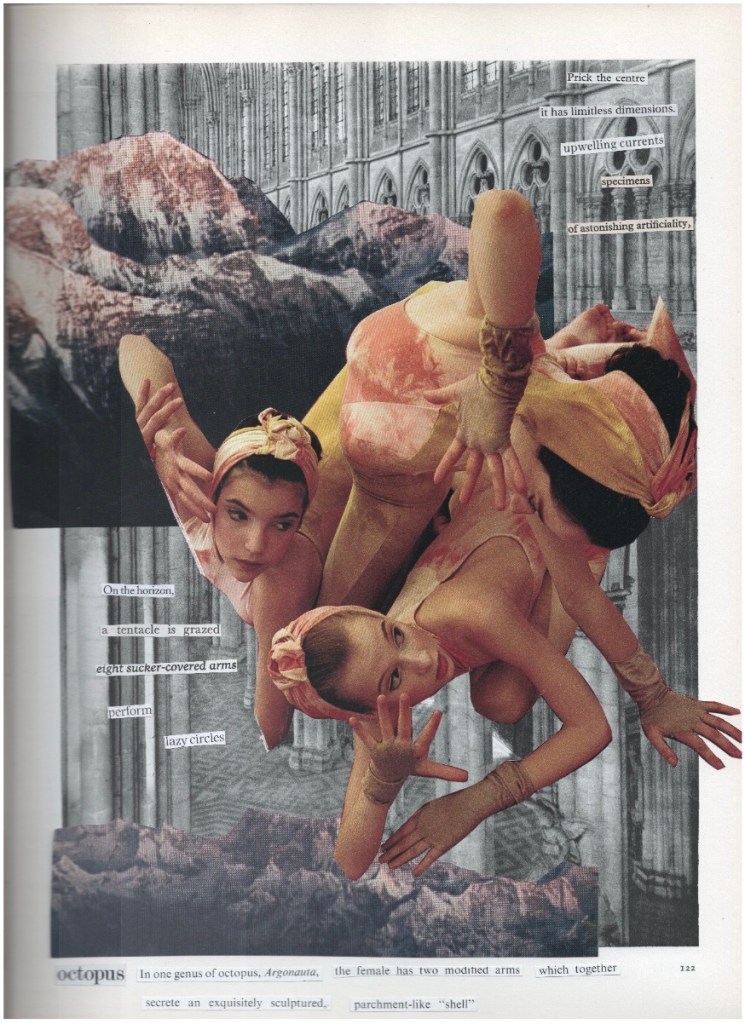
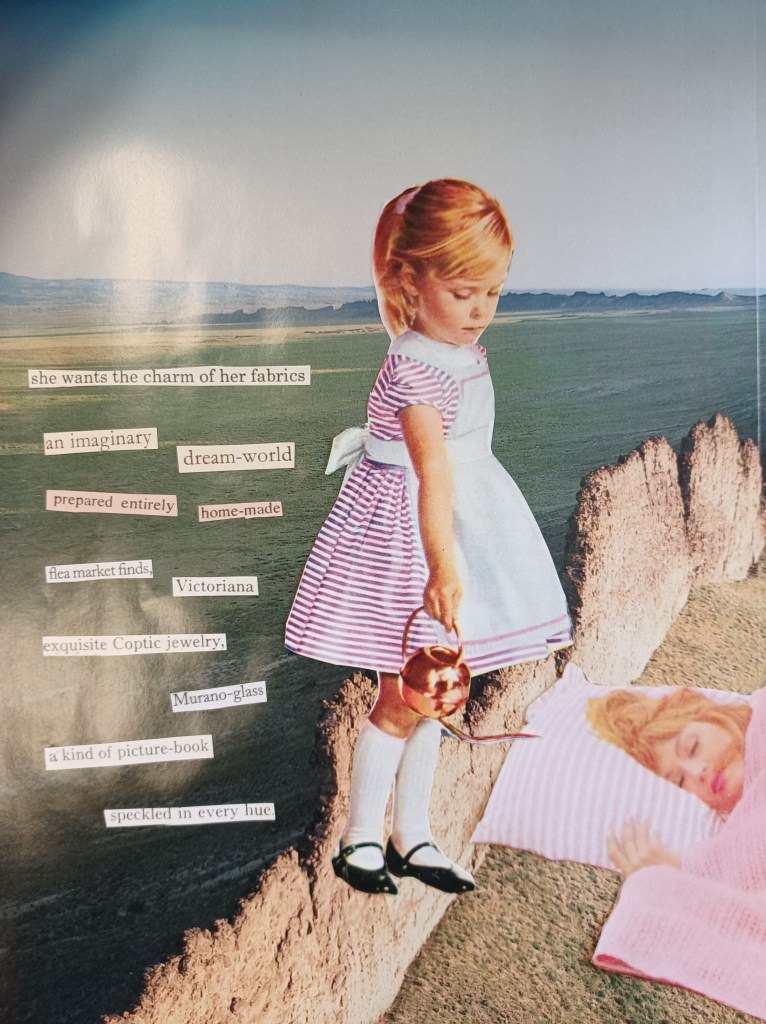
Although I was away when they were published, Ink, Swear and Tears, featured two of these collage poems in their Word & Image curation back in February – ‘Octopus’ and ‘To Sleep’.
‘Octopus’ published with Ink, Sweat and Tears
I’ve included an image of ‘Octopus’ above, which transforms the balletic tangle of limbs into a vision of an octopus. ‘To Sleep’ is another kind of visio-verbal fantasy of the luxuries of decadent, dream-filled sleep. Huge thanks to Kayleigh Jayshree and the team at Ink, Sweat & Tears for choosing these pieces for the feature!
A collage poem that I made as a birthday gift for my mum, also on the subject of dreaming, was featured on Sophie Herxheimer and W. N. Herbert’s Ghost Furniture Catalogue all the way back in August of last year. It’s titled ‘Fantasy Bed Collage’ and you can read it/view it/meditate on it here.
Detail from the ‘Fantasy Bed Collage’ published with Ghost Furniture Catalogue
The Ghost Furniture Catalogue continues to advertise an open call: ‘Poems needed to wallpaper skulls and fit out rattling minds’.
I’m hoping that this year I’ll have more time to think deeply and critically about how the visual and the verbal intertwines in my writing practice, and what a body of work on this subject might look like.
 Francesca Brooks