
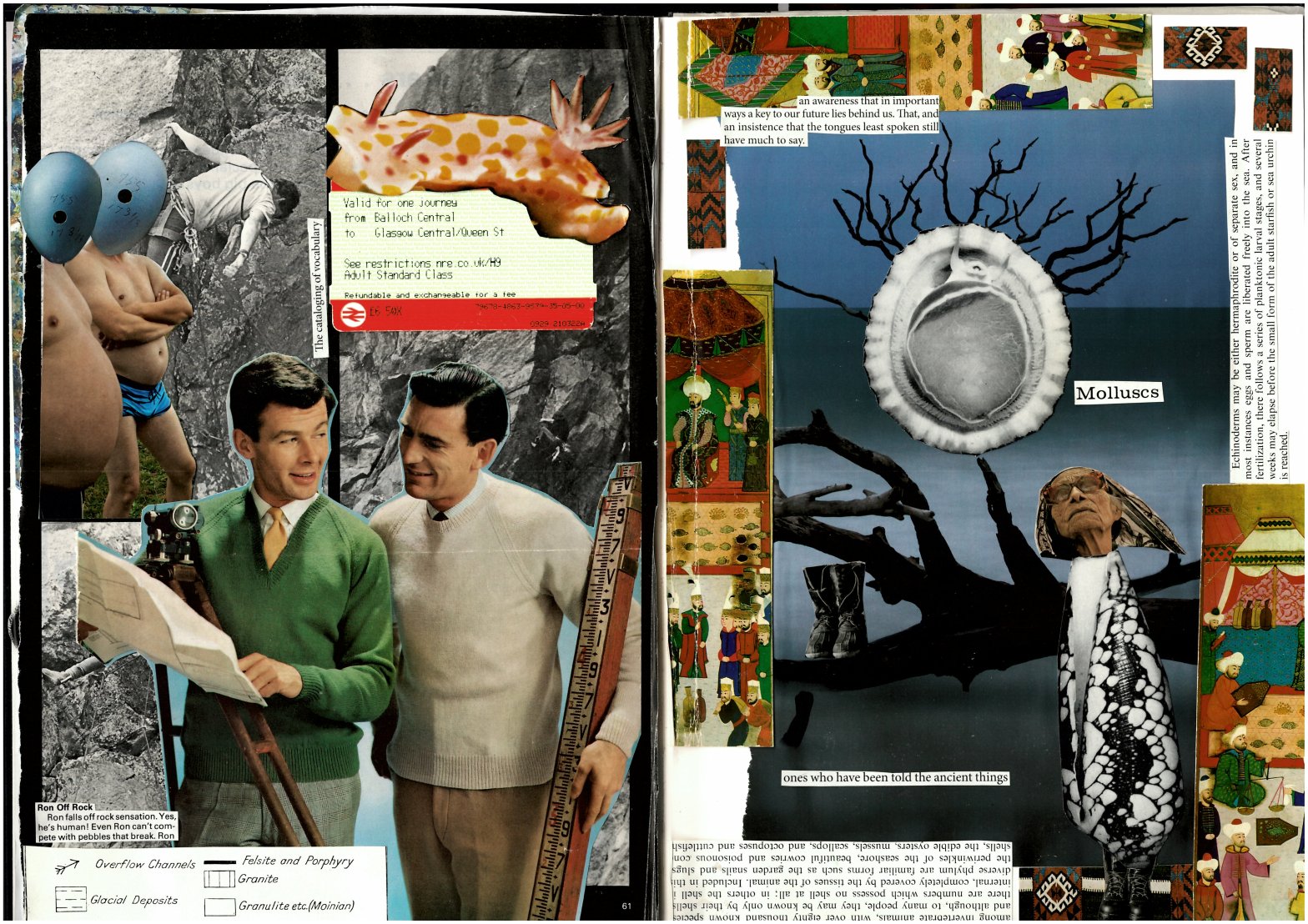
Last month, ahead of the launch of issue 15.2, two pieces I wrote or co-wrote were published with postmedieval: a journal of medieval culture studies. Both gave me the opportunity to write and think more about Edwin Morgan’s scrapbooks in the University of Glasgow Archives, and to reflect on how my month spent with them in 2022 has continued to shape my creative and critical practice.
For the first piece, ‘Medieval re-creation and translation in the archives of Derek Jarman and Edwin Morgan: A Dialogue’, I spent several months corresponding with the artist and writer E. K. Myerson over email in a kind of ‘show and tell’. As our creative-critical conversation unfolded in 2023, we discussed the queer medievalisms of Edwin Morgan and Derek Jarman, and reflected on what it means to be a medievalist working in a modern archive where we might feel more intimately connected with the touch and desires of the subjects of our research. In the second half of our conversation we shared how we had each responded creatively to our encounter with the archive: I, by making a Glasgow scrapbook of collage pages and page-spreads, and Myerson by working on a Jarmanesque film called ‘A submerged reliquary of a Kentish saint’.
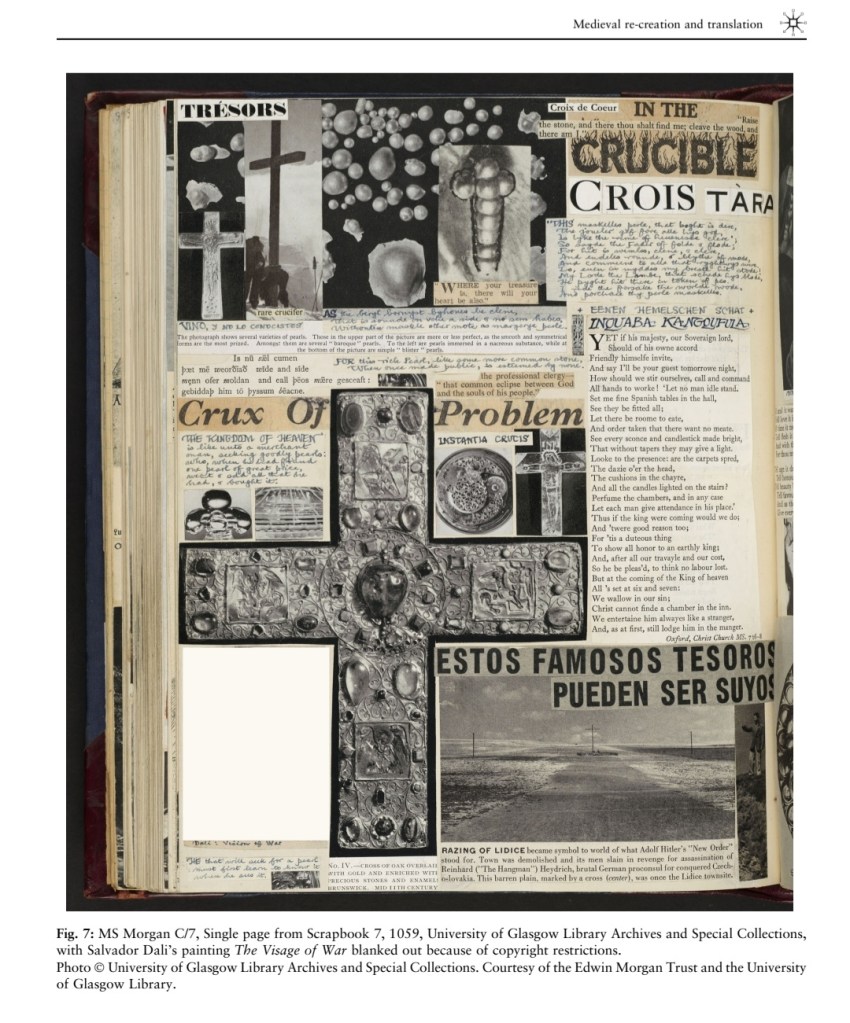
The second piece I wrote was an ‘About the Cover’ text, after postmedieval‘s editors asked if they could use one of Edwin Morgan’s scrapbook page-spreads on the cover of the issue. This was a really enjoyable invitation to spend more time slowly and closely reading a single page from the vast and unruly scrapbooks (3600 pages in total). I let myself be drawn in by a single image from Scrapbook 1, a panel from the early-eighth-century Franks Casket, and wondered (in a speculative and open-ended sense) if this might be the key to unlocking the whole composition.
Morgan’s use of an image from the Casket is a knowing and playful gesture. It invites us to actively engage with the tangled material of the scrapbook page-spread. A reader of the scrapbooks forges new connections as they move around the page and through the books via different routes. There is no one way to read or unlock the scrapbook page. We should revel in its riddling multiplicity.
Huge thanks are due here to Hannah Armstrong and Rebecca Menmuir who organised a workshop on Medieval Forgeries in 2022, where I met E. K. Myerson, and then invited us all to contribute to a Forgeries Essay cluster for postmedieval journal. They have been brilliant editors and collaborators.
I haven’t stopped thinking and working with Morgan’s scrapbooks yet – last week I co-ran a workshop with Fran Allfrey and Carl Kears (as part of Revoicing Medieval Poetry) at the IONA conference at King’s College London, where I led an exercise inspired by Morgan’s techniques of scrapbooking, assemblage and collage.
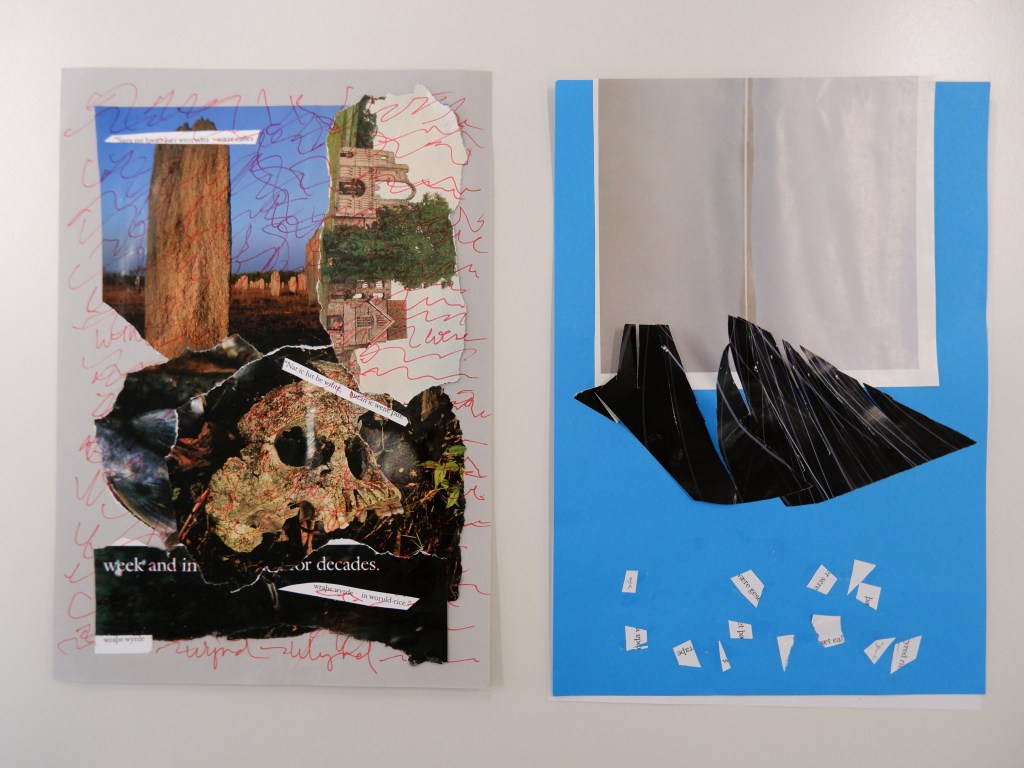
In the workshop I asked how the material/tactile/visual process of collage might allow us to explore the outer-reaches of a text we were beginning to translate from Old English into new language? How might working associatively and impulsively with found visual and verbal materials (old magazines, newspapers and books) inform the subterranean architecture of a translation? The workshop was really enjoyable, and it’s formed one of a series I’ve run this summer exploring collage poetry, cut-up text, and writing with scissors, in York, Manchester and London. I would love to run more creative workshops like this – so feel free to be in touch if you have a budget and this is of interest!
 Francesca Brooks