A Quest for the Camaldolese Grail in the Footsteps of Lynette Roberts

I have a longish essay in the current issue of PN Review (295), ‘A Quest for the Camaldolese Grail in the Footsteps of Lynette Roberts’. It’s the first thing I’ve had published about the Argentine-born, Welsh writer Lynette Roberts (1909-95), who is one of the subjects of my current research project on ‘Haunted Archives’ and women rewriting the medieval past. The essay is about access to cultural heritage, impostor syndrome, material and sensorial encounters with medieval manuscripts, and the fascinating writing life of Roberts herself.
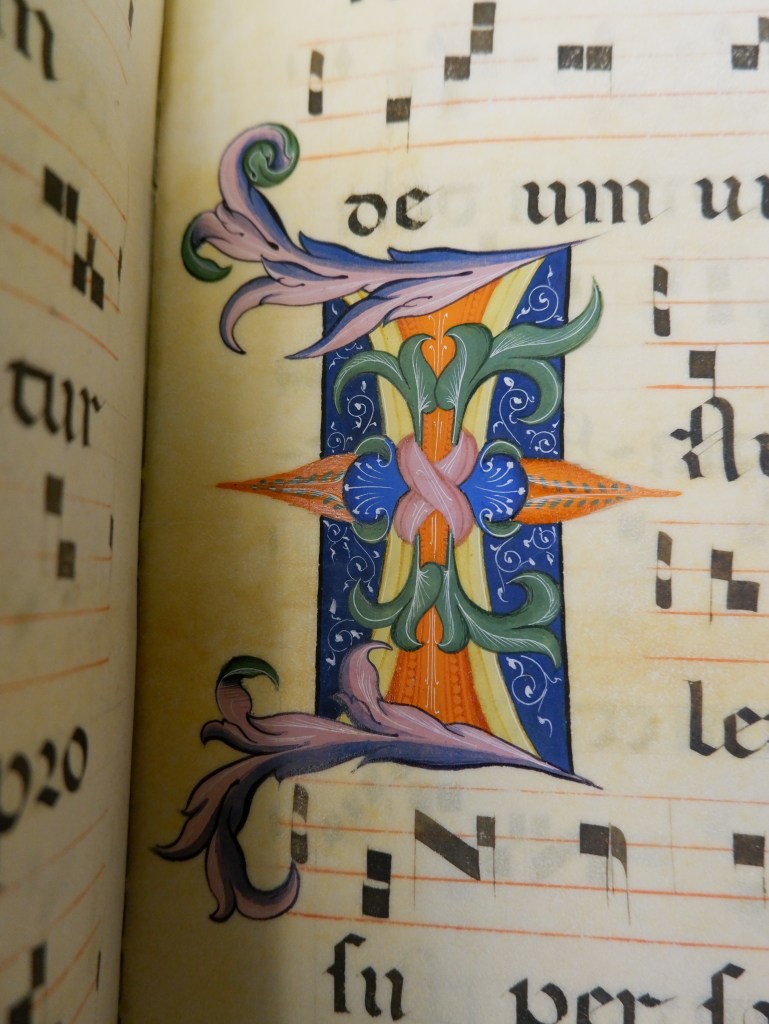
An illuminated rubric in the Camaldolese Grail

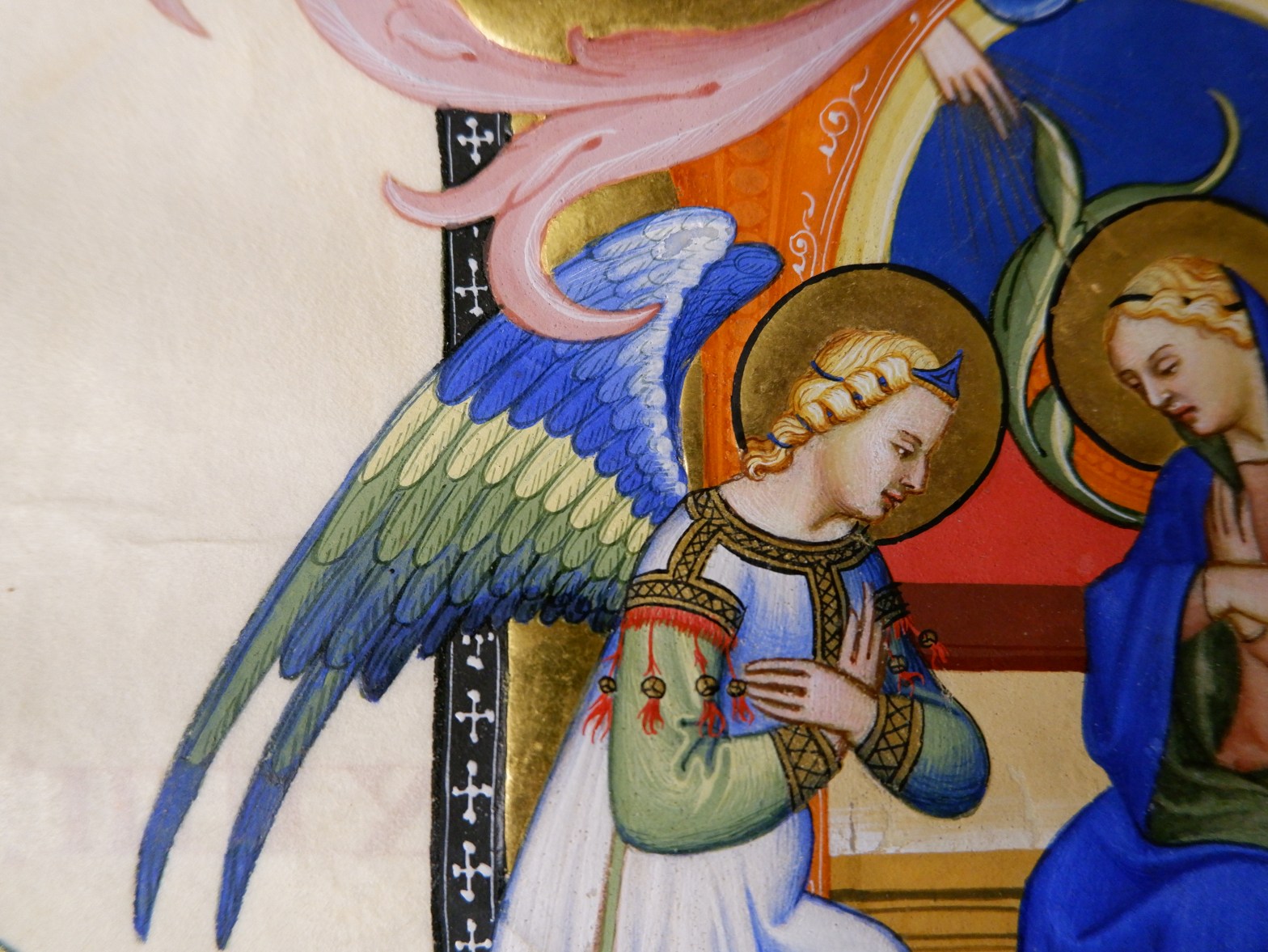
I thought I would share a brief post here with some images of the Camaldolese Grail (the subject of my quest and of Roberts’ parallel quest in the 1940s), as the piece is unillustrated in PN Review. The Camaldolese Grail (or Gradual) is a stunning illuminated fourteenth-century manuscript from Italy, now held by the Victoria And Albert Museum Art Library. I went to see it after reading Roberts’ essay on the manuscript (published in the 1940s in a journal known as Life & Letters) and took great pleasure in spending time with this gorgeous, gilded object.
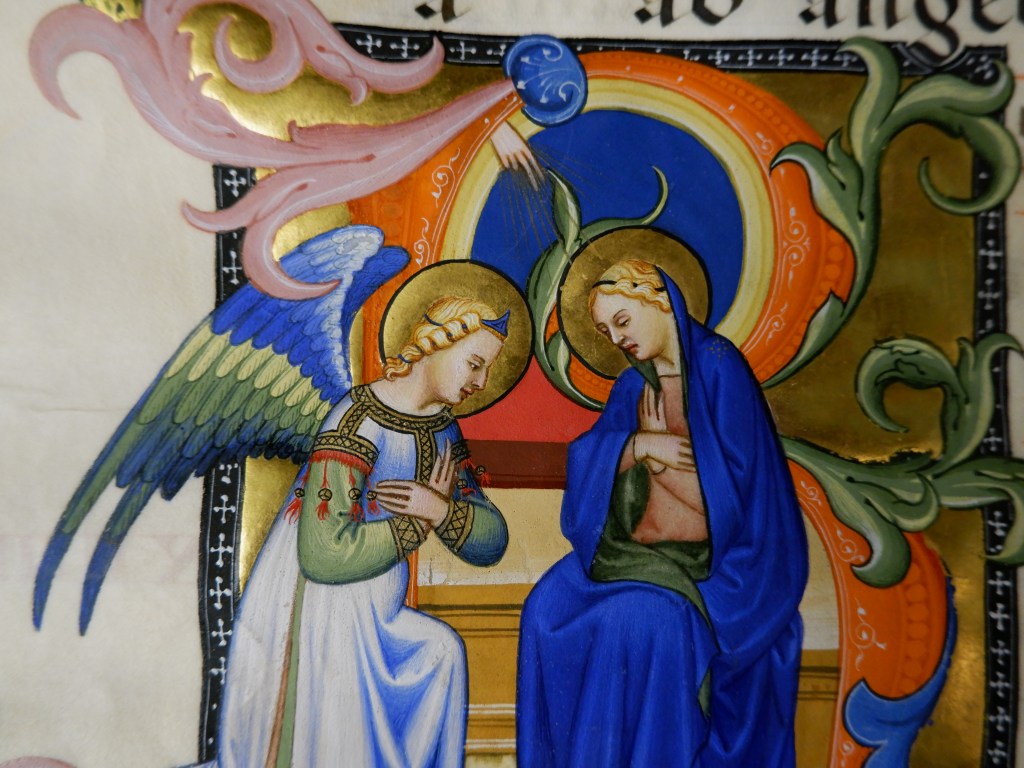
Detail from one of the illuminations in the Camaldolese Grail

Here’s a little snippet from the essay, demonstrating why Roberts’ essay had filled me with such curiosity:

‘Roberts writes about mushroom shades and mole tones and pink blancmange rocks. She draws our attention to the lines on a lake which do not depict ice, although she might forgive us for thinking so, but as she describes them appear to curve ‘like bleached seaweed, oriental eyelashes, or flayed wheat’. Arguing for why she thinks we see Lorenzo Monaco’s hand in this ostentatious, gilded manuscript, she writes that ‘[t]he miniatures which I have studied have the same pink blanc-mange rocks, the dark polished trees, lined haloes, heavy eye-shadow, and drooping mouths terminating in small dots’ of the paintings she has observed in the National Gallery. Roberts doesn’t simply describe the manuscript. She uses her poet’s eye to vividly evoke her aesthetic and material encounter with this sacred object, producing a surreal portrait of a book that seems to distort time under her gaze.’
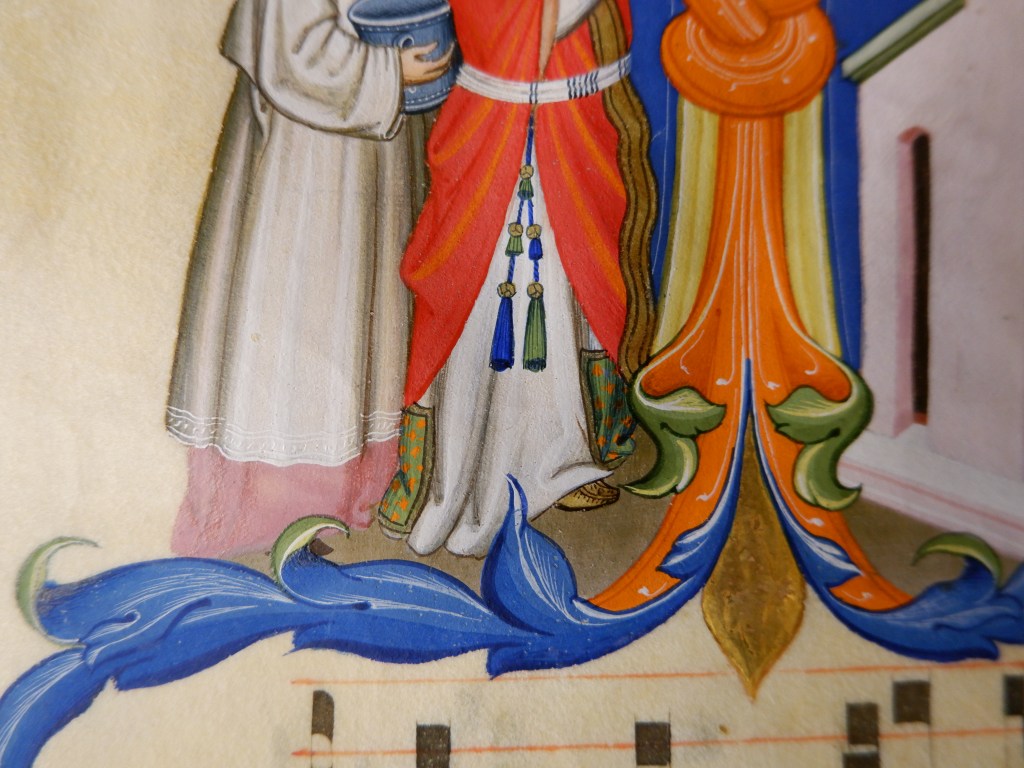
Another detail from the illuminations in the Camaldolese Grail

My visit to the Art Library didn’t go perfectly smoothly, however, and it was this experience of fear, trepidation, and even shame, as well as what this revealed about the significance of Roberts’s own encounter with the manuscript, that became the focus of the essay. I don’t want to repeat the story here (you’ll have to buy a copy of the journal), but what I initially ordered in the library wasn’t the manuscript at all – it was an itemised collection of waste materials from the manuscript’s restoration in 2009!

A small glass bottle containing some waste from the manuscript’s restoration

If you’ve never heard of Lynette Roberts before, and haven’t read any of her poetry, then you’re in for a treat, as Carcanet are publishing a new and expanded edition of her poems next month.
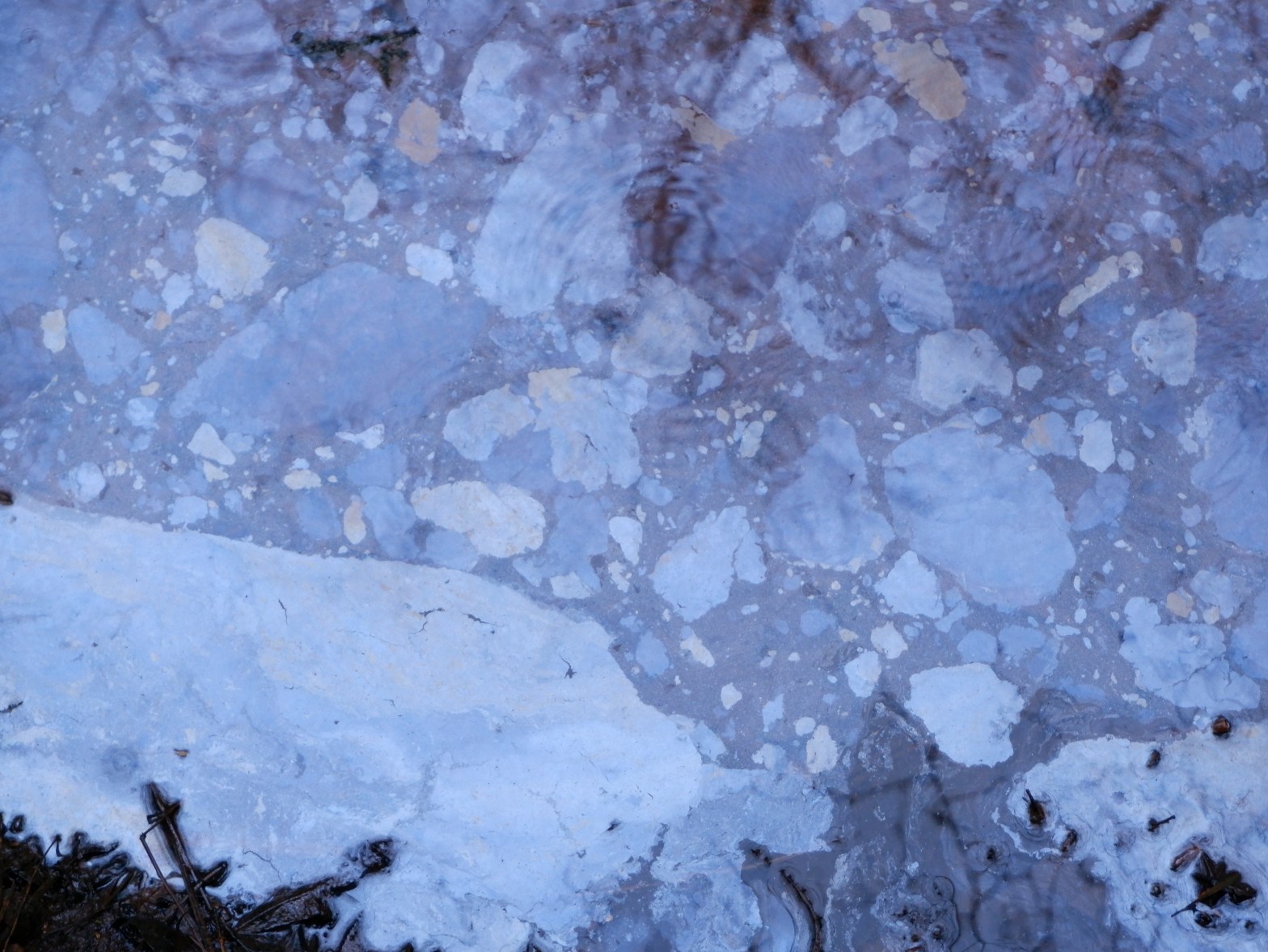
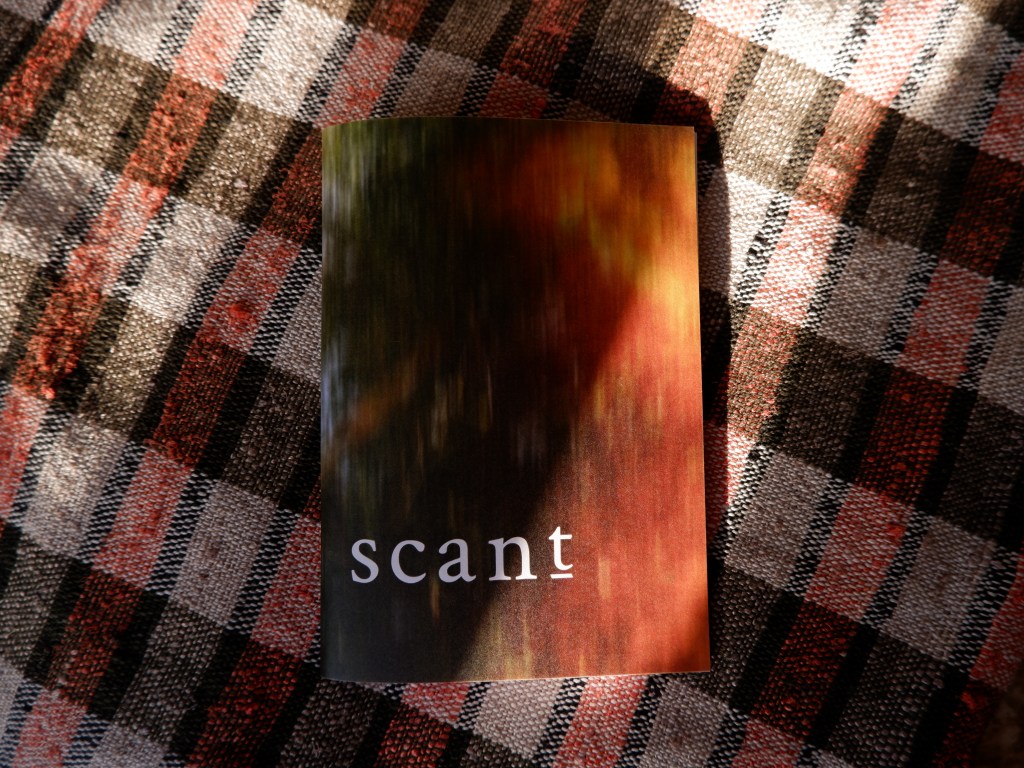
January Floods: Scant Magazine

This post is going up a little later than planned. Back in January Scant launched its first issue with an exhibition of work from the magazine at Saan Gallery in Manchester. The magazine brings together poetry and photography that responds to the scantness and transience of our present time: a moment of ecological deterioration and destruction, and of economic and cultural precarity. I have a poem, ‘In Anticipation of the Flood’, and a series of linked photographs published in the first issue, alongside brilliant poetry by Tom Branfoot, Joey Frances, and Purbasha Roy, amongst others, and arresting images from Lucy Ridges, Natasha Javadine, and Sarah Russell (to name just some of the photographers).

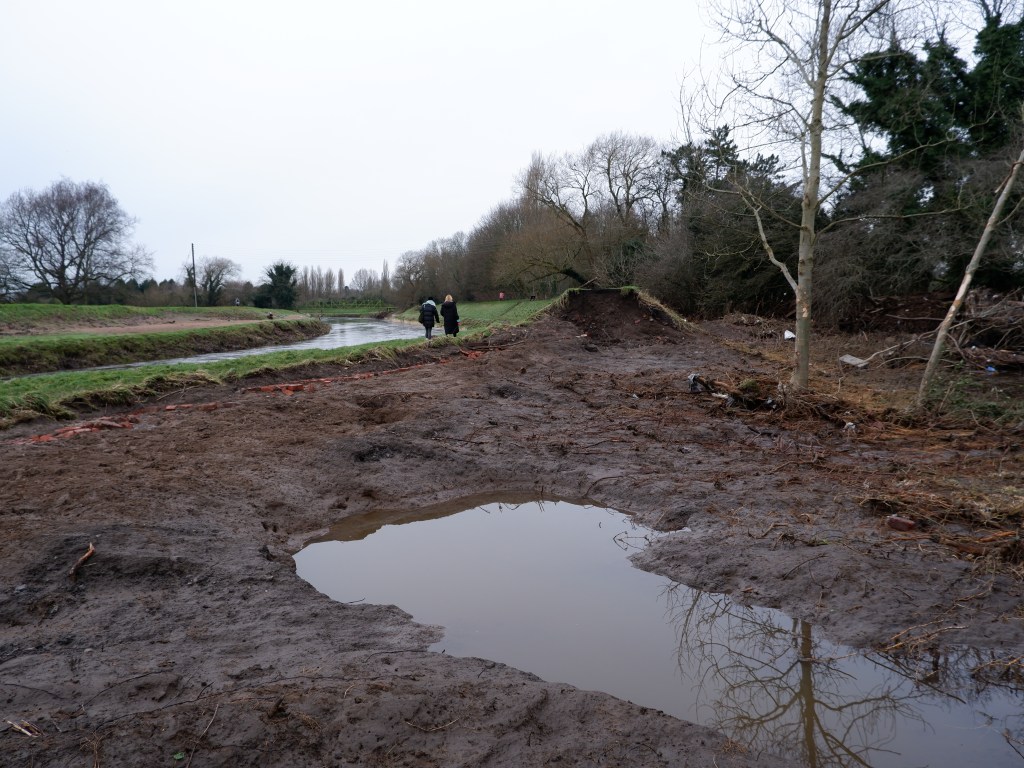
A picture of flood damage in Didsbury where the River Mersey punched a hole in the high river path and forged a new route through the allotments and Rugby Club.

In a strange, haunting moment of synchronicity, the publication of Scant and my images (poetic and photographic) of flood and its polluted aftermath, coincided with a new wave of floods in Didsbury where I live. On New Year’s Day the river Mersey rose in a powerful torrent, more quickly and fiercely than anyone had anticipated. As well as flooding homes and carrying away parked cars (a devastating start to the year for many), it punched a yawing hole in the high path above the river – ripping trees up by their roots, swamping allotments, rugby pitches, and golf courses, and forging a new route for itself through the city.

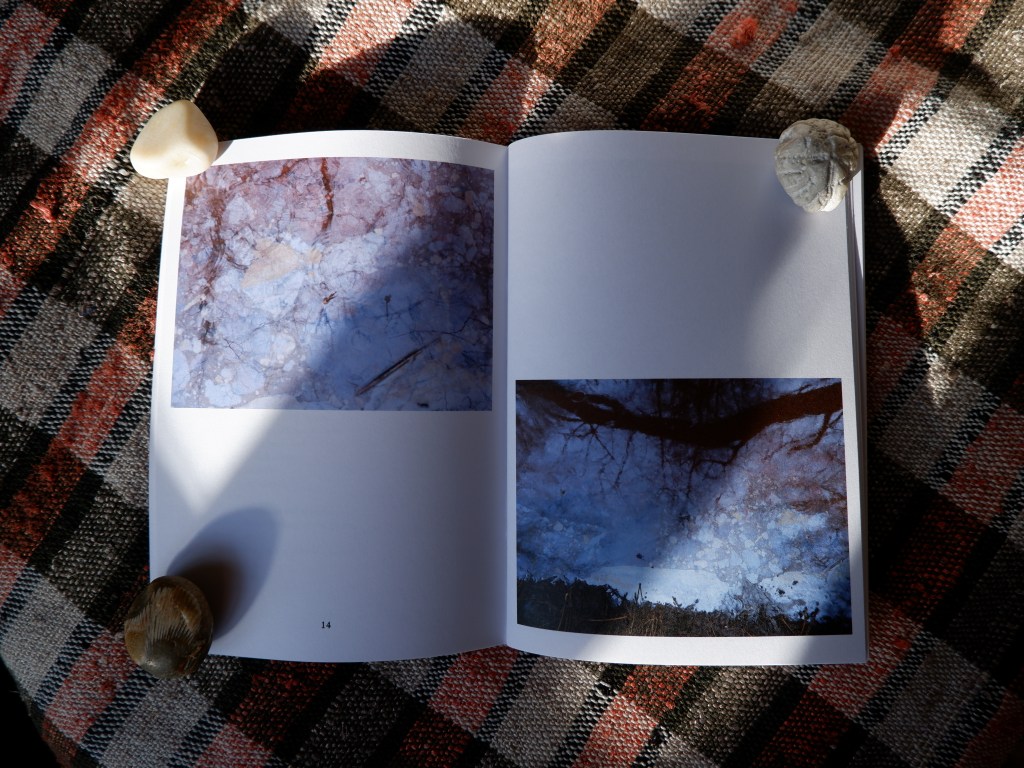
When people’s homes have been damaged, this might seem like the least of a community’s worries. But when the Mersey floods, the plains around Fletcher Moss also become marked by the shameful detritus of our polluting lives, which usually lies hidden at the bottom of the river bed. The branches of trees become garlanded with plastic bags, Tampax and dog poo bags (like unholy, inverted Clootie trees), and the paths are littered with plastic containers, rusted bicycle wheels, and other discarded, household items. My poem and photograph series for Scant explore the attraction and repulsion of the stagnant water of the flooded park, its surface coated with shimmering oil slicks.

My photographs of polluted patterns in the water, as published in Scant

You can purchase Scant issue 1 from a number of brilliant bookshops, including the UniTom store and Jot Bookshop in Manchester, and Good Press Bookshop in Glasgow. An interview with Scant’s editors Sam Rye and Jack McKenna was also recently published on the Corridor8 website.

Here’s a little snippet of my poem from the issue, as a sign-off:

After dark the water burns,

fire on stagnant flood, rusted

grilles curdle misplaced Mersey

silt, stopped currents and lurid

orange clouds, a sky you might

fall into […]

From ‘In Anticipation of the Flood’

Art Writing and Art Reviews

Earlier this year I was in a unfamiliar city for an interview for a job I was sure I wasn’t going to get. In the way I often do, I wandered into a bookshop in search of something like comfort – a new world into which I might retreat as I tried to forget the interview and let go of my anxiety about the wait for a decision. The book I chose was Marina Warner’s Forms of Enchantment, a collected volume of Warner’s sublime and fanciful writings on art and artists.

Back when I was in my early twenties Warner was a hero of mine. I loved fairy stories, folk tales, and their re-imaginings, I was obsessed with the art of Paula Rego, with exploring ideas of mythmaking and feminism. And, as I was testing out ideas about who I might become and what I might do with my life, I spent a lot of evenings and weekends writing art reviews in the lonely city I had recently moved to.

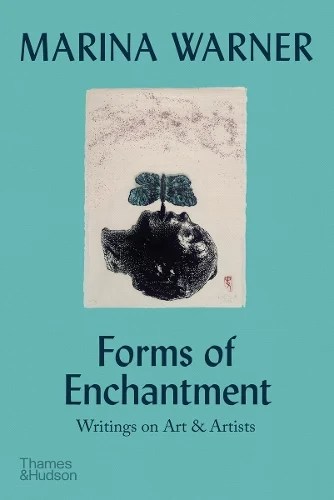
Cover of Marina Warner’s Forms of Enchantment

In the preface to her book Warner writes that she wishes to ‘argue for writerly ways of exploring art, as developed in literary tradition’. She goes on to argue that:

‘When I write about artworks and the artists who made them, I try to unite my imagination with theirs in an act of absorption that corresponds to the intrinsic pleasure of looking at art. Since the Greeks, ekphrasis has offered a way of capturing visual experience in words – but while I believe in close looking, description is not enough. I like to explore above all the range of allusions to stories and symbols; not to pin down the artwork as if it were a thesis or a piece of code, but to touch the springs of the work’s power. Art writing at its most useful should share in the dynamism, fluidity and passions of the objects of its inquiry.’ (pp. 8-9)

I love that phrase – ‘to touch the spring’s of the work’s power’ – because it suggests the liveliness of the work of art, its dynamic status as something still in process, as a thing with a resonance and agency all its own, waiting to meet the mind that extends towards it. Reading Warner’s collected art writings felt comforting and nostalgic: these words were familiar treasure ranging across subjects as diverse as Hieronymus Bosch, Tacita Dean, Helen Chadwick and Sigmar Polke. But in reading Warner’s work I also felt something like regret, or perhaps it was even jealousy: a slightly existential feeling of paths taken and those diverted from. Although I recognised the pleasure conveyed in Warner’s words, they seemed to more readily apply to my relationship with literary texts in my recent critical and academic writings: close reading rather than close looking. I remembered the pleasure of writing about art as an ‘act of absorption’, as Warner describes it, but it was a distant memory. I had a vision of myself in my early twenties on assignment for The Hackney Citizen, wandering the streets and galleries of east London and filing copy from coffee shops. Once upon a time I’d interviewed Conrad Ventur for Garageland magazine, reviewed shows by Georgia Hayes and art festivals in Aldeburgh, and even written catalogue essays for galleries in Berlin. What had I lost or left behind when I stopped doing this kind of writing?

All of this is a circuitous, expanded way of saying that when Corridor8 asked me to review an exhibition for their brilliant online publication, I leapt at the chance. Back in October I caught the train to Preston as the damp, warm, grey air was burnt to a blaze of blue by the autumn sun, to review ‘The Pearls and the Oyster’ at the Birley Studios. You can read the review I wrote about the show here.

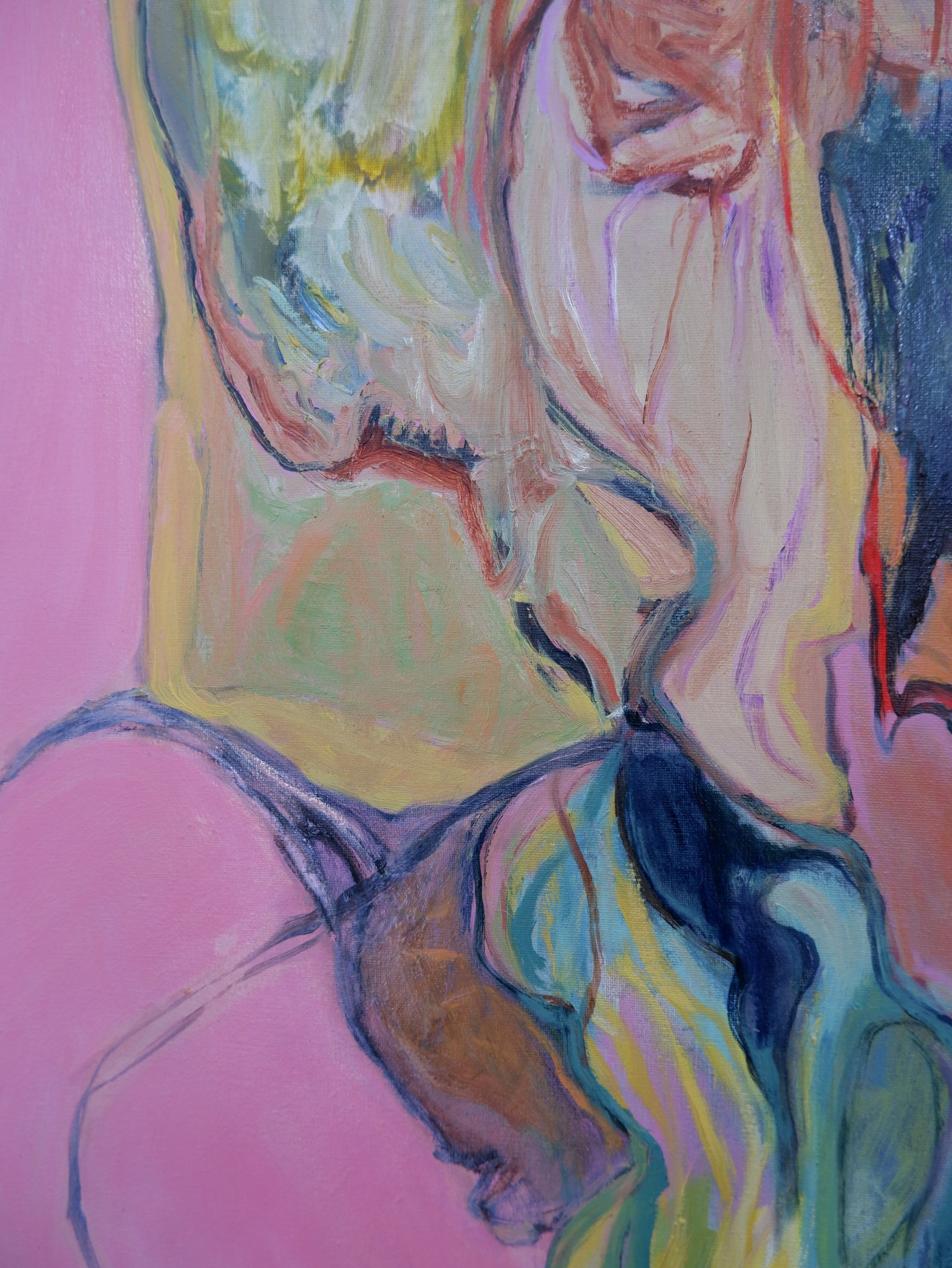
Detail of Nancy Collantine’s painting ‘Parafantasia’ (2024)

I bought a new notebook on the way in, chatted with the curator Jayne Simpson in the sun-filled gallery, and spent a very long time absorbed in the worlds of each of the thirteen paintings of this group show, making notes and wondering where this act of close looking might take me.

I’m just getting warmed up and hope I might have the chance to do something similar again:

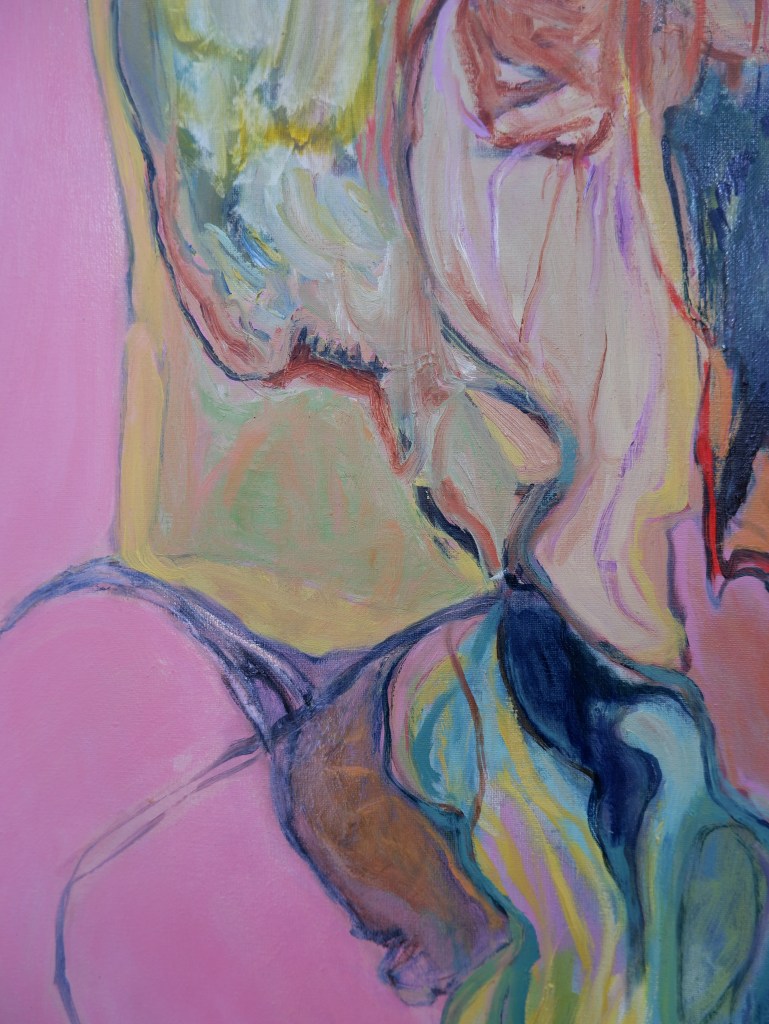
What I enjoyed most about this exhibition was the opportunity to look closely and to see where that looking might take me. The ventilation shafts of the tunnels under the Mersey in Liverpool can have a surreal, space-age quality to them, but Payne’s ‘Shaft 1’ (2019), spray-painted with oil on concrete, brilliantly emphasises their dilapidated mundanity. The photo-realist quality of Payne’s work is challenged by an interest in the texture and characteristics of both medium and subject. Paint chipped or scraped from the surface of her concrete canvas replicates (or replaces) the peeling paintwork of the building depicted; the bubbling of paint in the muted sky might give us the sense that we are really looking at the concrete surface of Shaft 1 and not a depiction of it. Where does the painting end and the world begin? At the other end of the spectrum is Nancy Collantine’s ‘Para-Fantasia’ (2024), a painting whose abstract voluptuousness resists any attempt to find definitive signs in the cascade of colour, line and pattern that tumbles down the canvas over a tectonic plane of pink. Sometimes I think I catch a figure, a face, a landscape, and then the painting seems to rearrange itself again before my eyes.

Creative Re-creation and Translation: Edwin Morgan, Derek Jarman & the archive

Last month, ahead of the launch of issue 15.2, two pieces I wrote or co-wrote were published with postmedieval: a journal of medieval culture studies. Both gave me the opportunity to write and think more about Edwin Morgan’s scrapbooks in the University of Glasgow Archives, and to reflect on how my month spent with them in 2022 has continued to shape my creative and critical practice.

For the first piece, ‘Medieval re-creation and translation in the archives of Derek Jarman and Edwin Morgan: A Dialogue’, I spent several months corresponding with the artist and writer E. K. Myerson over email in a kind of ‘show and tell’. As our creative-critical conversation unfolded in 2023, we discussed the queer medievalisms of Edwin Morgan and Derek Jarman, and reflected on what it means to be a medievalist working in a modern archive where we might feel more intimately connected with the touch and desires of the subjects of our research. In the second half of our conversation we shared how we had each responded creatively to our encounter with the archive: I, by making a Glasgow scrapbook of collage pages and page-spreads, and Myerson by working on a Jarmanesque film called ‘A submerged reliquary of a Kentish saint’.

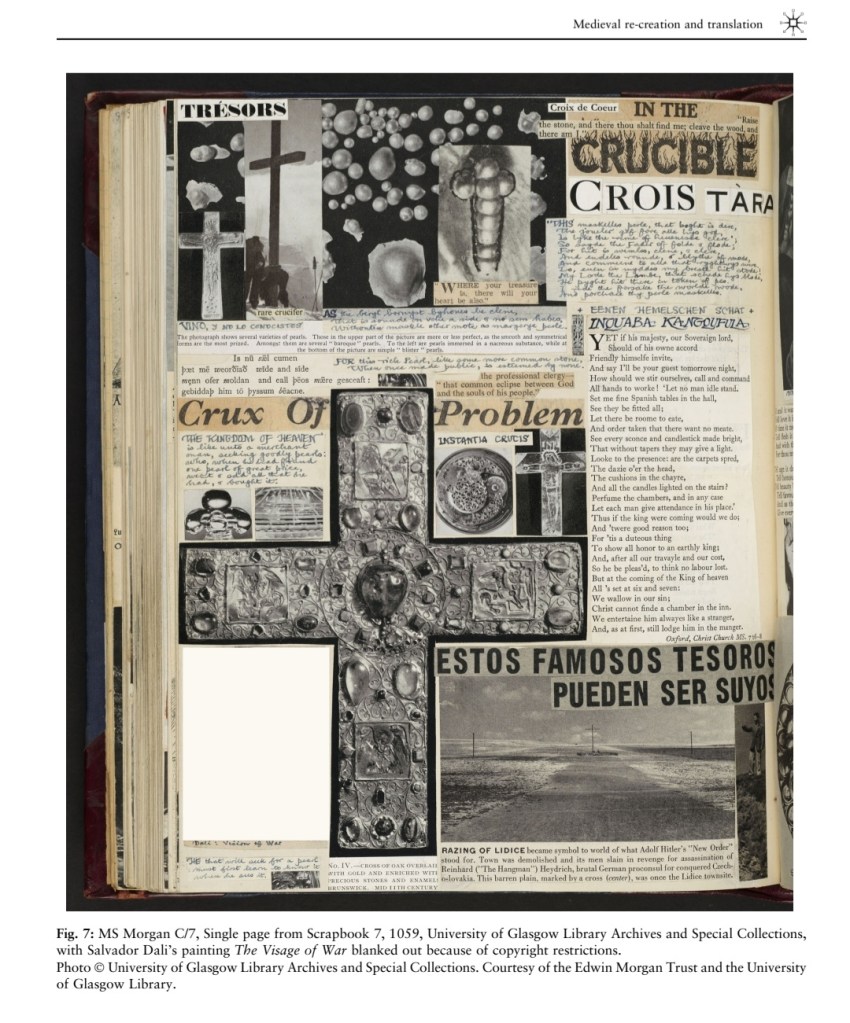
Screenshot of one of Morgan’s scrapbook pages published in the postmedieval article

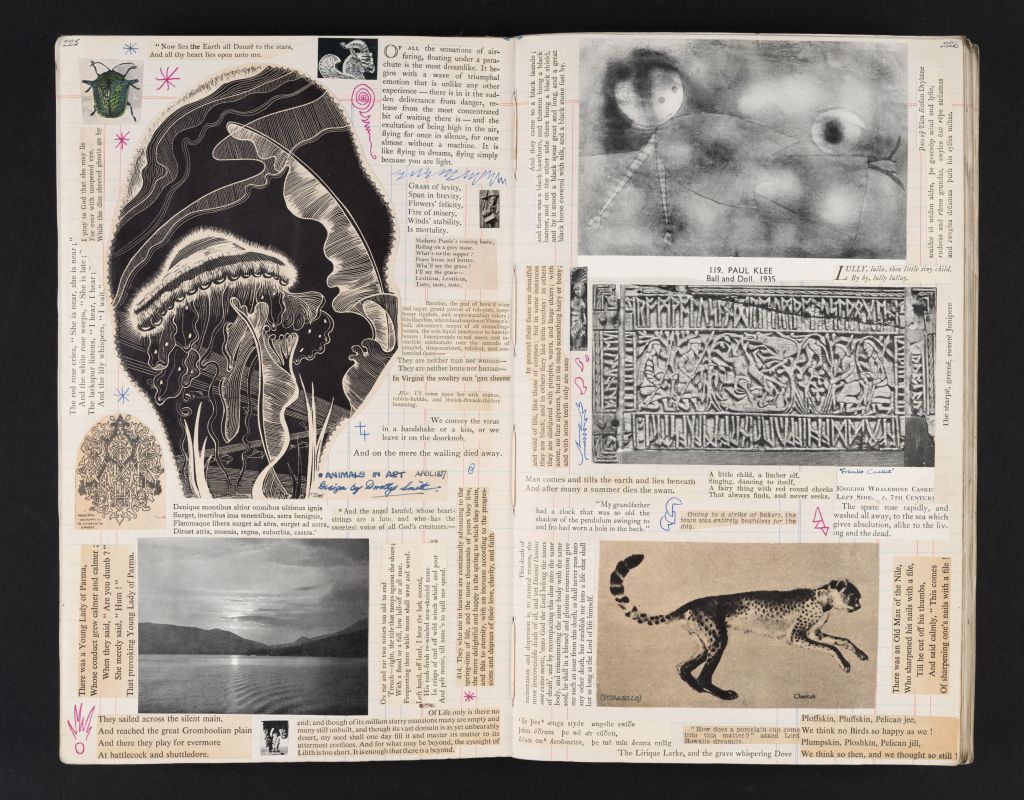
The second piece I wrote was an ‘About the Cover’ text, after postmedieval‘s editors asked if they could use one of Edwin Morgan’s scrapbook page-spreads on the cover of the issue. This was a really enjoyable invitation to spend more time slowly and closely reading a single page from the vast and unruly scrapbooks (3600 pages in total). I let myself be drawn in by a single image from Scrapbook 1, a panel from the early-eighth-century Franks Casket, and wondered (in a speculative and open-ended sense) if this might be the key to unlocking the whole composition.

Morgan’s use of an image from the Casket is a knowing and playful gesture. It invites us to actively engage with the tangled material of the scrapbook page-spread. A reader of the scrapbooks forges new connections as they move around the page and through the books via different routes. There is no one way to read or unlock the scrapbook page. We should revel in its riddling multiplicity.

Huge thanks are due here to Hannah Armstrong and Rebecca Menmuir who organised a workshop on Medieval Forgeries in 2022, where I met E. K. Myerson, and then invited us all to contribute to a Forgeries Essay cluster for postmedieval journal. They have been brilliant editors and collaborators.

I haven’t stopped thinking and working with Morgan’s scrapbooks yet – last week I co-ran a workshop with Fran Allfrey and Carl Kears (as part of Revoicing Medieval Poetry) at the IONA conference at King’s College London, where I led an exercise inspired by Morgan’s techniques of scrapbooking, assemblage and collage.

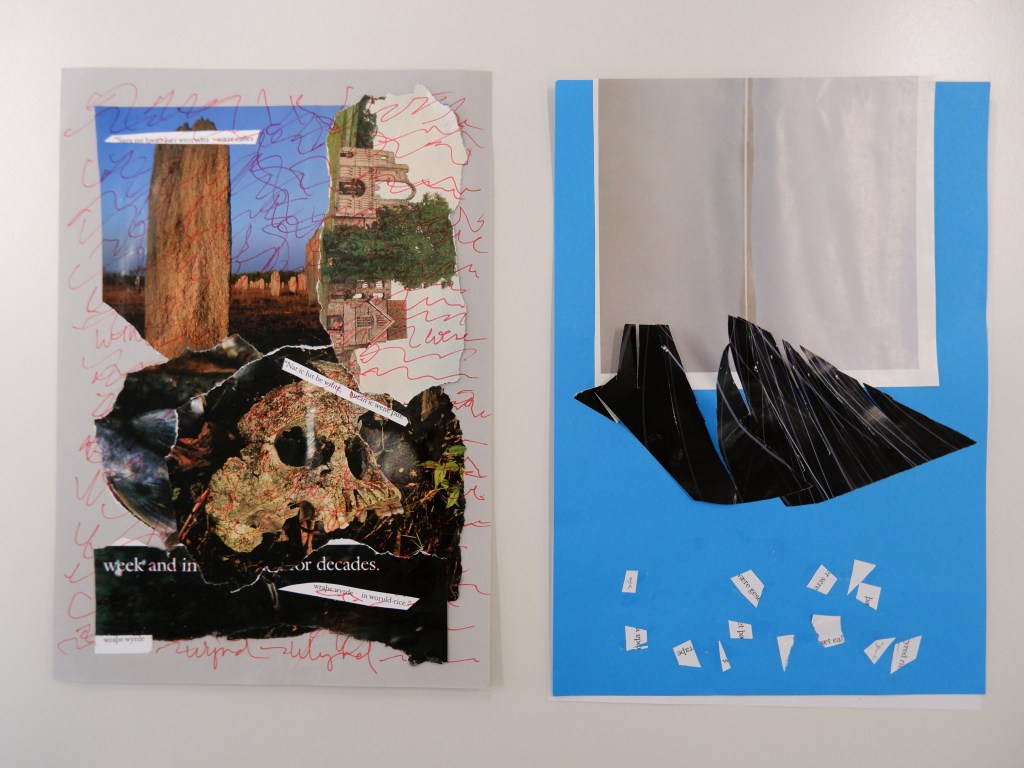
Collages in response to the Old English Pharoah poem made by Lisa Weston (left) and Heather Maring (right)

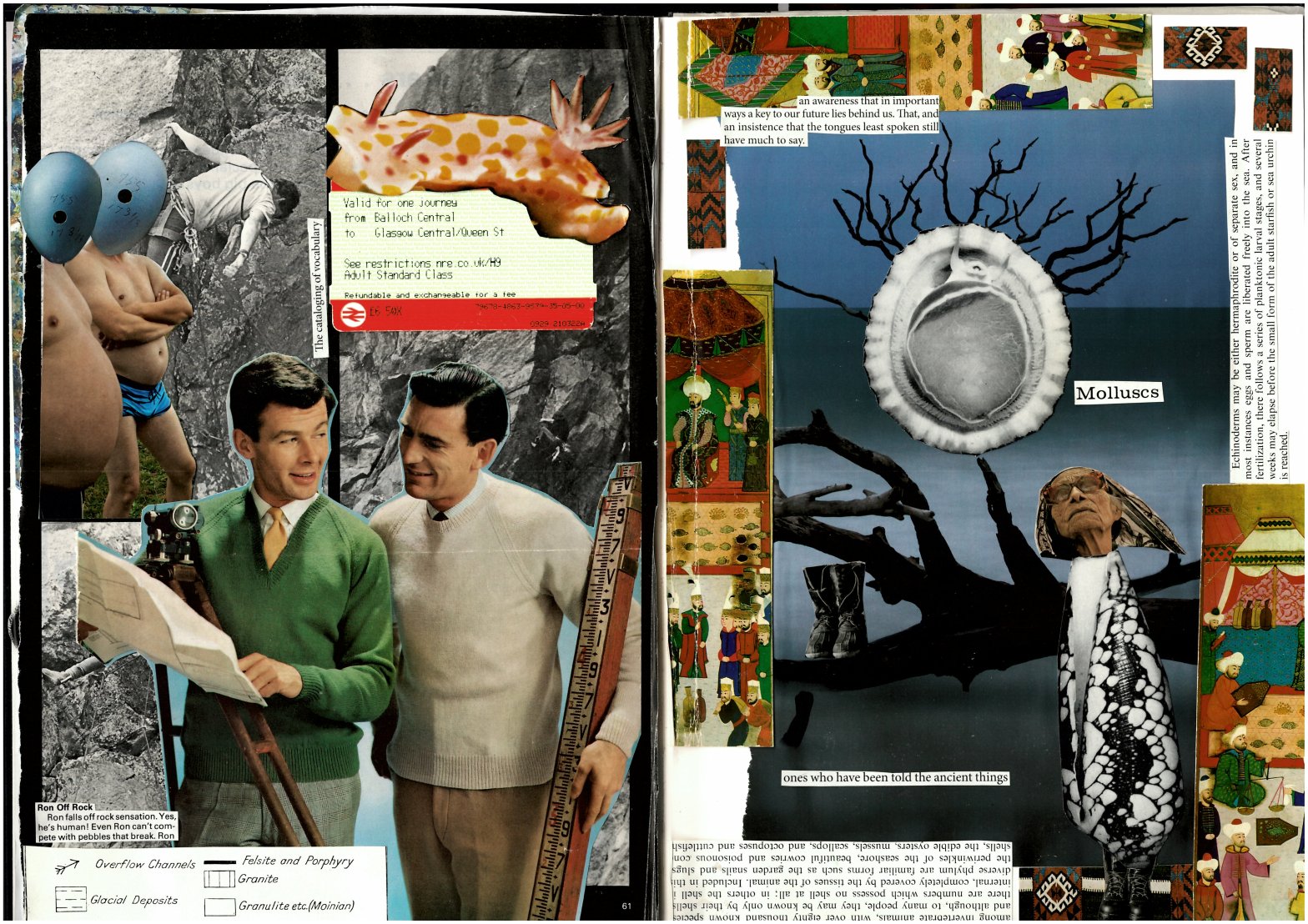
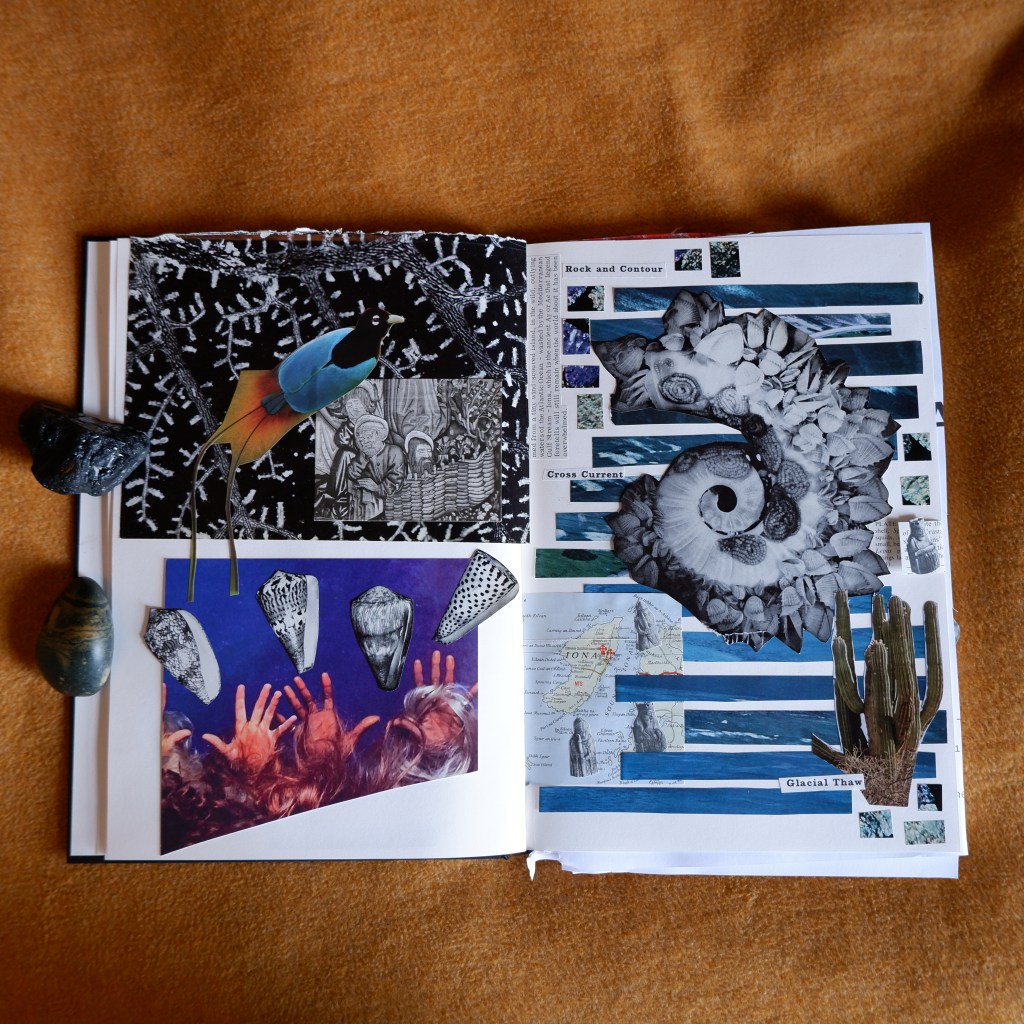
In the workshop I asked how the material/tactile/visual process of collage might allow us to explore the outer-reaches of a text we were beginning to translate from Old English into new language? How might working associatively and impulsively with found visual and verbal materials (old magazines, newspapers and books) inform the subterranean architecture of a translation? The workshop was really enjoyable, and it’s formed one of a series I’ve run this summer exploring collage poetry, cut-up text, and writing with scissors, in York, Manchester and London. I would love to run more creative workshops like this – so feel free to be in touch if you have a budget and this is of interest!

Word and Image – sleeping, dreaming, floating

I’ve continued to experiment with the playful, irreverent and sometimes associative relationship between word and image in ‘collage poems’. The process of making them can be brief and impulsive, but often extends over a long period of time, and might be seen as an iterative process.

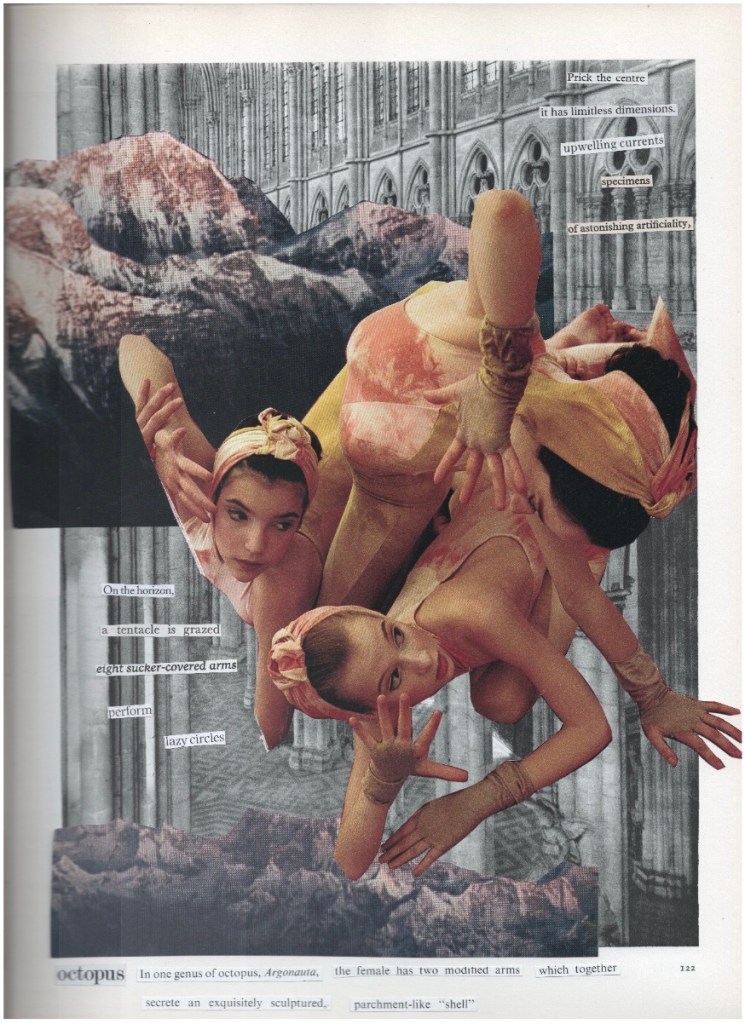
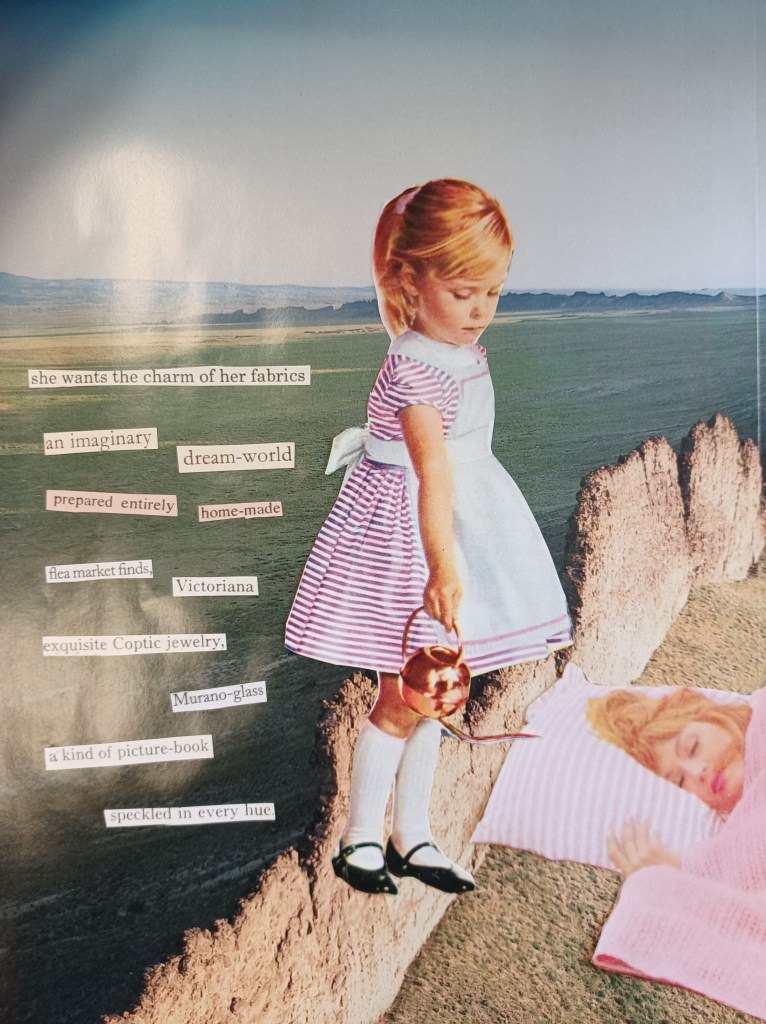
Although I was away when they were published, Ink, Swear and Tears, featured two of these collage poems in their Word & Image curation back in February – ‘Octopus’ and ‘To Sleep’.

‘Octopus’ published with Ink, Sweat and Tears

I’ve included an image of ‘Octopus’ above, which transforms the balletic tangle of limbs into a vision of an octopus. ‘To Sleep’ is another kind of visio-verbal fantasy of the luxuries of decadent, dream-filled sleep. Huge thanks to Kayleigh Jayshree and the team at Ink, Sweat & Tears for choosing these pieces for the feature!

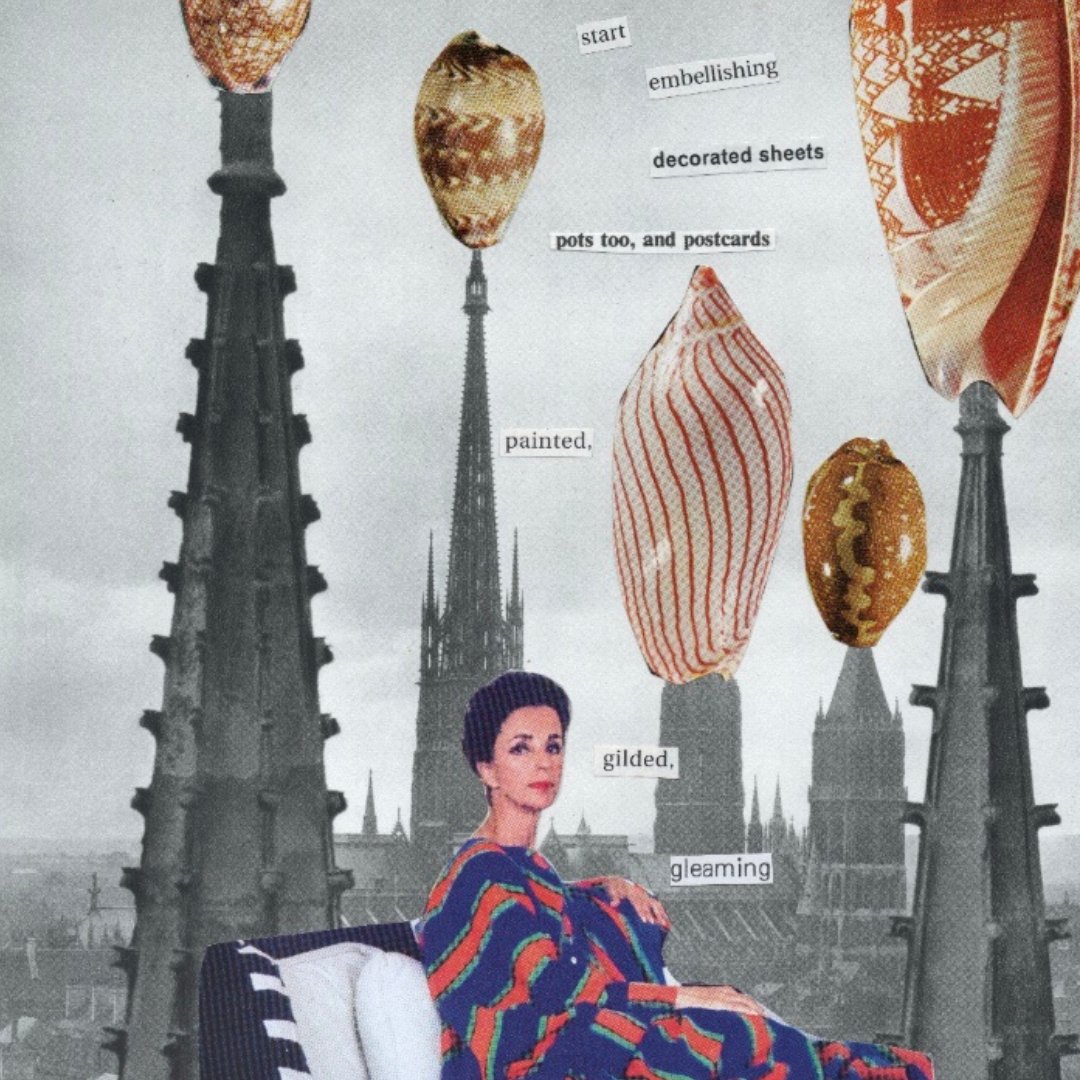
A collage poem that I made as a birthday gift for my mum, also on the subject of dreaming, was featured on Sophie Herxheimer and W. N. Herbert’s Ghost Furniture Catalogue all the way back in August of last year. It’s titled ‘Fantasy Bed Collage’ and you can read it/view it/meditate on it here.

Detail from the ‘Fantasy Bed Collage’ published with Ghost Furniture Catalogue

The Ghost Furniture Catalogue continues to advertise an open call: ‘Poems needed to wallpaper skulls and fit out rattling minds’.

I’m hoping that this year I’ll have more time to think deeply and critically about how the visual and the verbal intertwines in my writing practice, and what a body of work on this subject might look like.

Beachcombed Assemblages

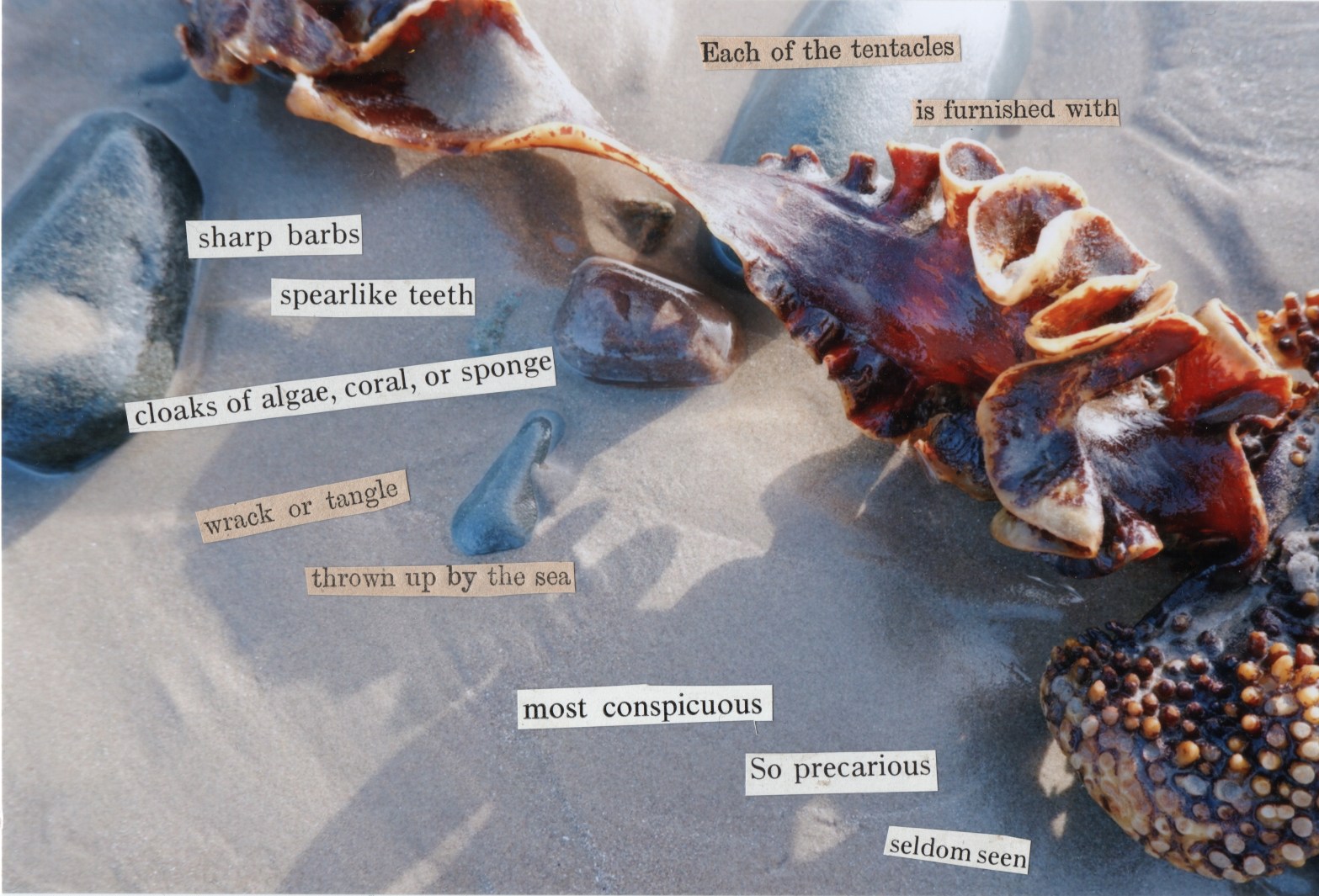
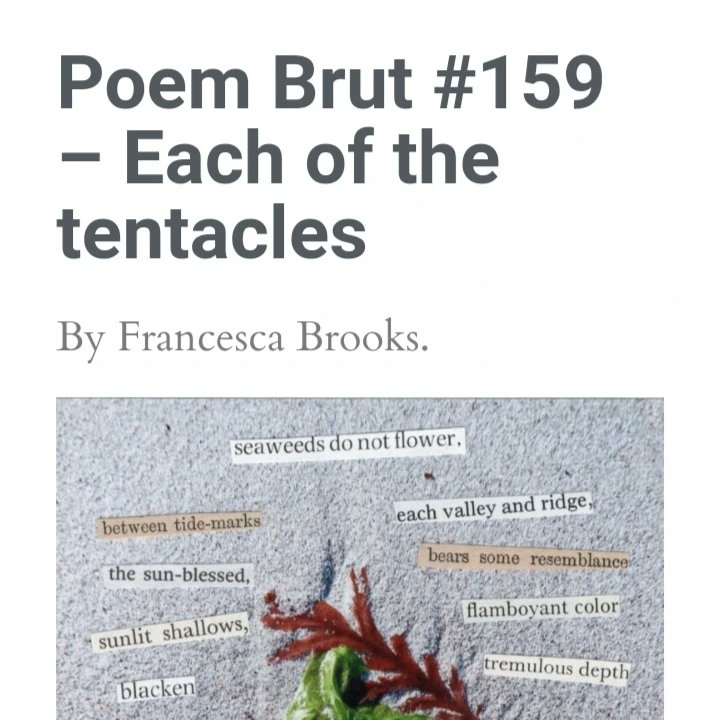
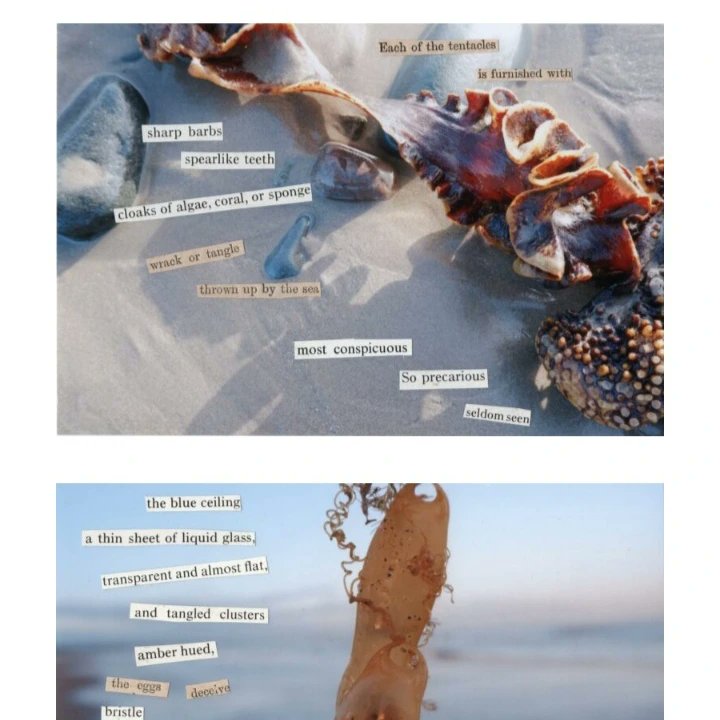
I’ve been referring to these ‘creations’ as photo collage poems, but it occurs to me now that this is a little unwieldy in its eclectic hybridisation of forms. So, some of my ‘beachcombed assemblages’ have been published by SJ Fowler over on 3AM Magazine as part of the Poem Brut series. You can read/view them here.

Screenshot of the assemblages as they appear on 3AM Magazine

These little artefacts and poem-objects combine photographs of things encountered on the beach with found text arranged on the surface of the photo in a kind of collage. I began making them when I was struggling with writers’ block and longing to be by the sea, as if the unrequited impulse to walk the coast was somehow tied up with the frustrated impulse to write.

Screenshot of the assemblages as they appear on 3AM Magazine

The Poem Brut series is a real treasure trove of visual poetry and poem-objects. Here is Jules Sprake with forms that combine printmaking and poetry, ink sculptures by Agata Maslowska, stitched found visual poetry by Laura Davis, palimpsests, typewriter poems, asemic writing and much more. You can explore the full Poem Brut archive here.

Here’s the text I wrote to accompany my three beachcombed assemblages:

Each of these visual poems is a multitemporal document that begins with a walk on a beach in search of objects of interest to photograph and ends with the beachcombing of a collection of found texts in search of phrases. These found phrases, reassembled on the surface of the photograph, re-enliven the images during periods of time when I am far from the beach and longing to return. In moments of landlock and heightened desire for the meditative pleasures of walking the coastline, I return to my photographs. These photographs are a part of the record I keep of rare beach walks. When I return to this record in my Manchester flat, it gives me a renewed sense of the surreal and mysterious quality of things encountered at the edge of the tide. The collage poems I create on the surface of these photographs are responsive but also impulsive: they rely on a randomness that is in tune with the chance discoveries made on the beach.

Poem Brut #159

‘Choosing Jewels’ and the pleasures of searching for fungi

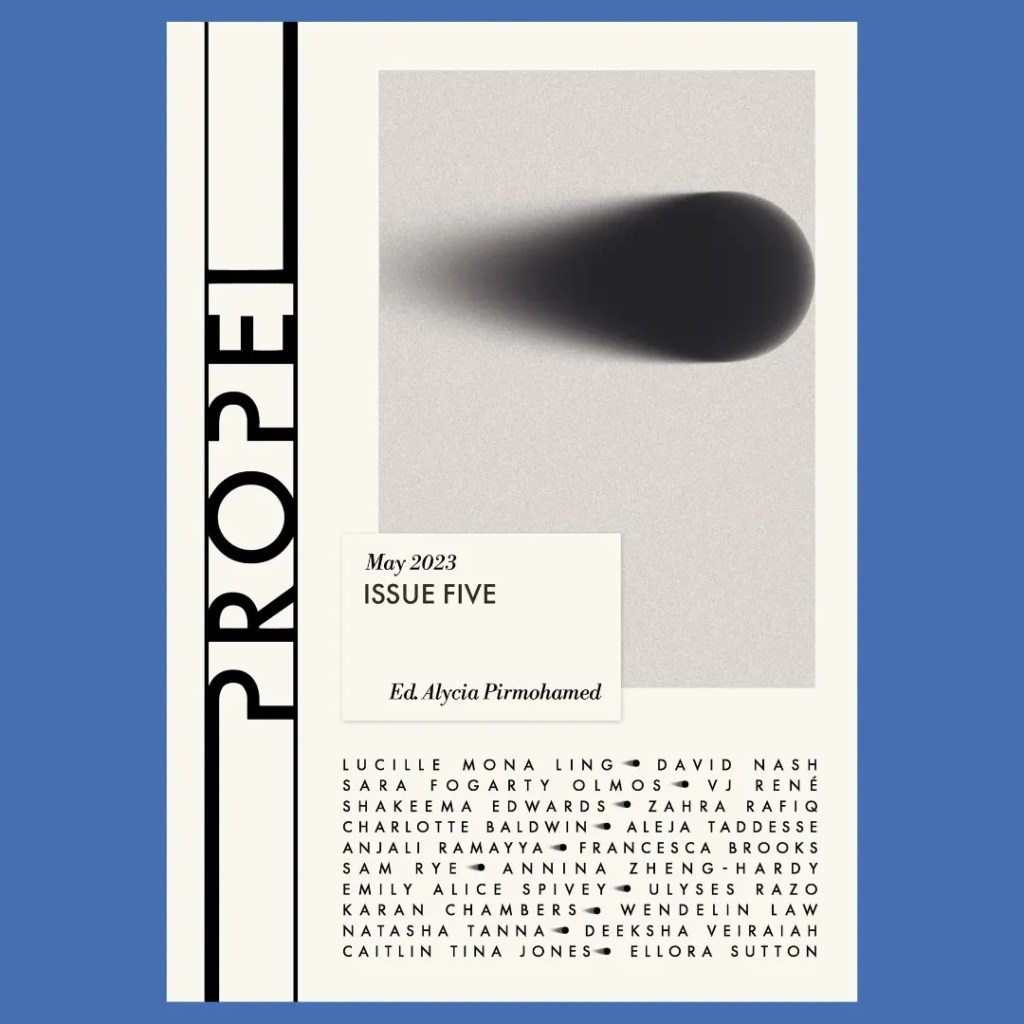
I’ve just had a poem published in the fifth issue of Propel Magazine, edited by the wonderful poet Alycia Pirmohamed (author of Another Way to Split Water). The magazine is available to read online for free. You can also listen to me and all of the other poets reading our work aloud and bringing the poetry to life.

My poem ‘Choosing Jewels’ is a love letter of sorts to the pleasures of searching for fungi. It takes its title from a phrase garnered magpie-like from the digitised manuscripts of Virginia Woolf’s To the Lighthouse, which you can explore here. I don’t want to say too much more about the poem here, as its spare and lyrical (I hope) and does its own work.

If you are curious about fungi too and would like to read more of my writing on the mycorrhizal world, I do have an essay about being landlocked and searching for mushrooms on The Clearing here.

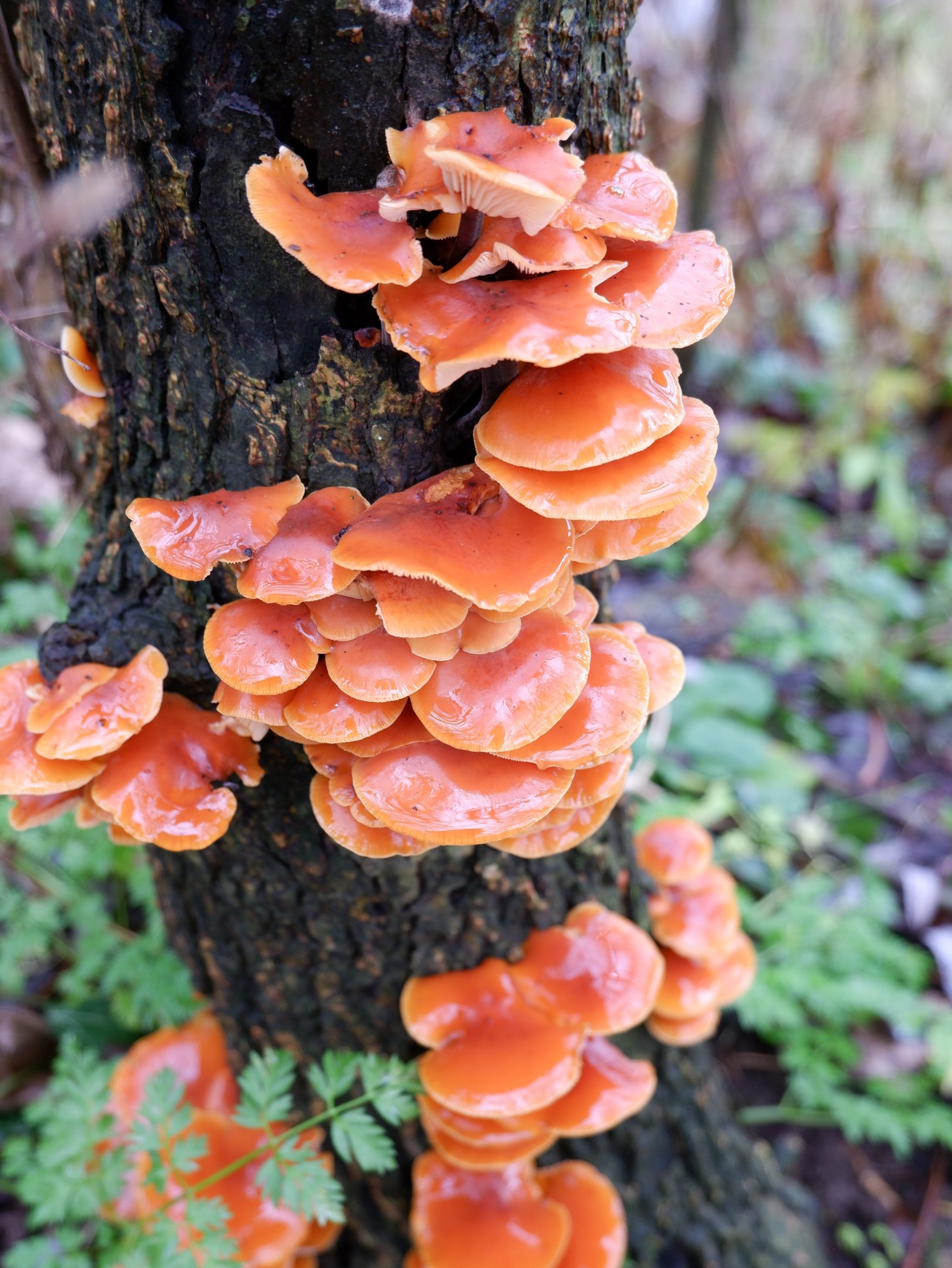
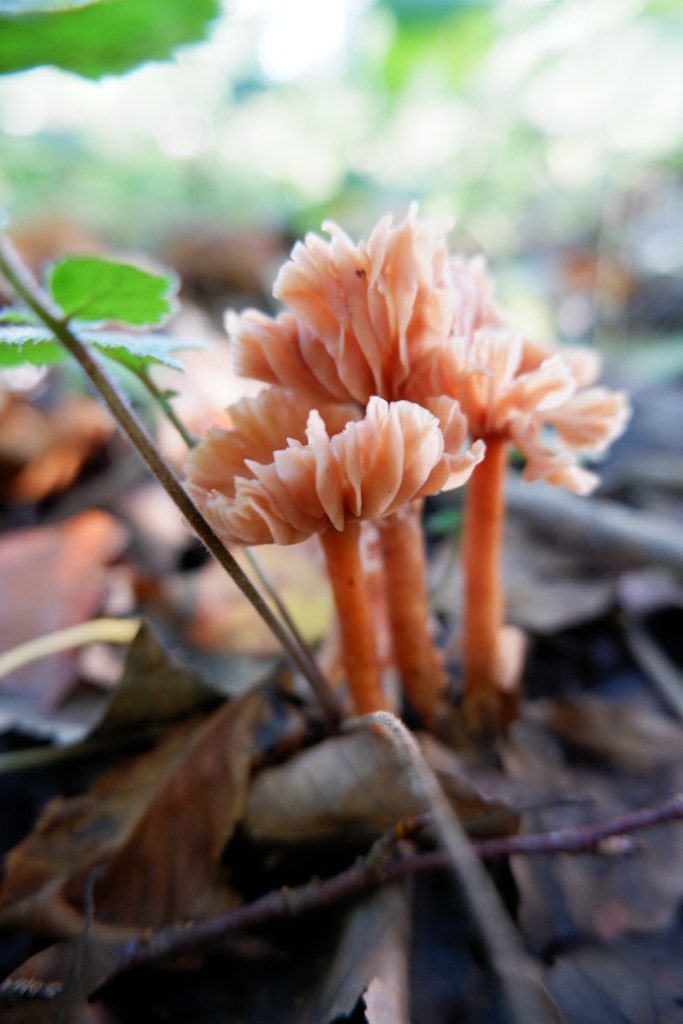
The pictures below show some mushrooms, or fungi, that aren’t at all shy about displaying the secrets of their gills.

Propel Magazine has a new guest editor for every issue and aims to showcase the work of poets who have not yet published a first collection. In her editorial Alycia writes beautifully about the work of editing as an opportunity not for ‘gatekeeping’, but for opening doors:

Anyway, all of this is to say I find being a gatekeeper a complicated thing, and though the job is to select only a few from the many, I hope that doors have also been opened: to new voices and strategies, to perspectives that are experimenting with subject and form. To poems that found a home here because they came across my particular gaze, and maybe I saw something, understood something, or felt something that the poet wanted to get across in a magical kind of symbiosis.

Alycia Pirmohamed, Propel Magazine Issue 5

I’m so grateful that my strange little mushroom poem caught Alycia’s eye.

Poet of the Medieval Modern: Winner of the University English Book Prize

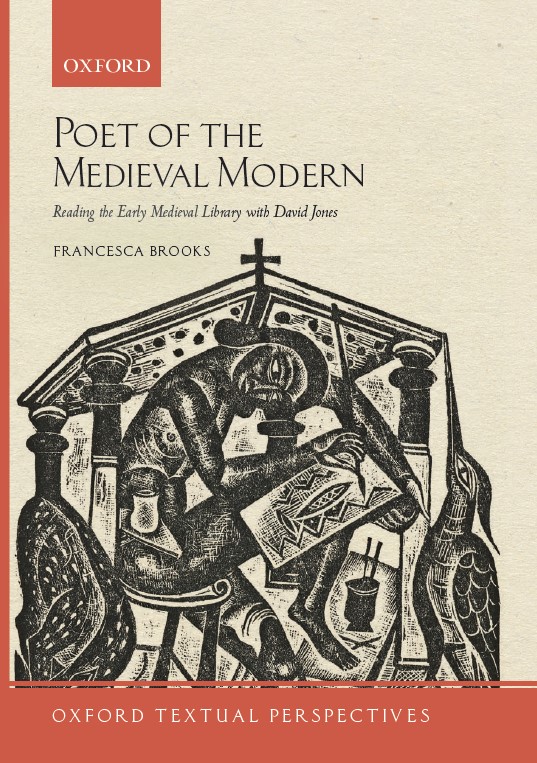
Poet of the Medieval Modern, my first monograph, has just won the University English Book Prize 2022! I’m really delighted to see the book receive this recognition and to see that the judges have understood so well what it was I wanted to achieve.

The judges write:

‘This is an exceptional book that combines a wealth and depth of scholarship with an engaging writing style that draws even the non-specialist reader in. Focussed on The Anathemata, a work published by Faber in 1952 by autodidact, artist, and poet David Jones, it demonstrates through meticulous examination of archival materials and annotations from the Anglo-Saxon Library as well as from previously unexamined correspondence, the extent to which acts of reading and creative critical thinking on Jones’s part underpinned production of The Anathemata, a culturally and linguistically composite text that uses translation as a means of cultural renewal.

It makes an original contribution to both Medieval Studies and Modernism, the former in respect of Jones’s engagement with Old English which Brooks shows to have had ‘a far greater influence … than previously recognized’ on his work, the latter in respect of the archival turn in New Modernist Studies. It combines archival research and genetic criticism with a nuanced understanding of creative process. […]

Uncovering a richly hybrid heritage that transcends national categories, this is an important book not just for modernist scholars in general but for anyone thinking about literary  identity.’

You can buy the paperback for just £18.99 from any online book retailer, but if you decide to buy direct from OUP here you can use the code ‘AAFLYG6’ to get 30% off.

The first review, written by Paul Robichaud for Modern Philology, can also be read here.

gorse 11: whins/furze…north/south

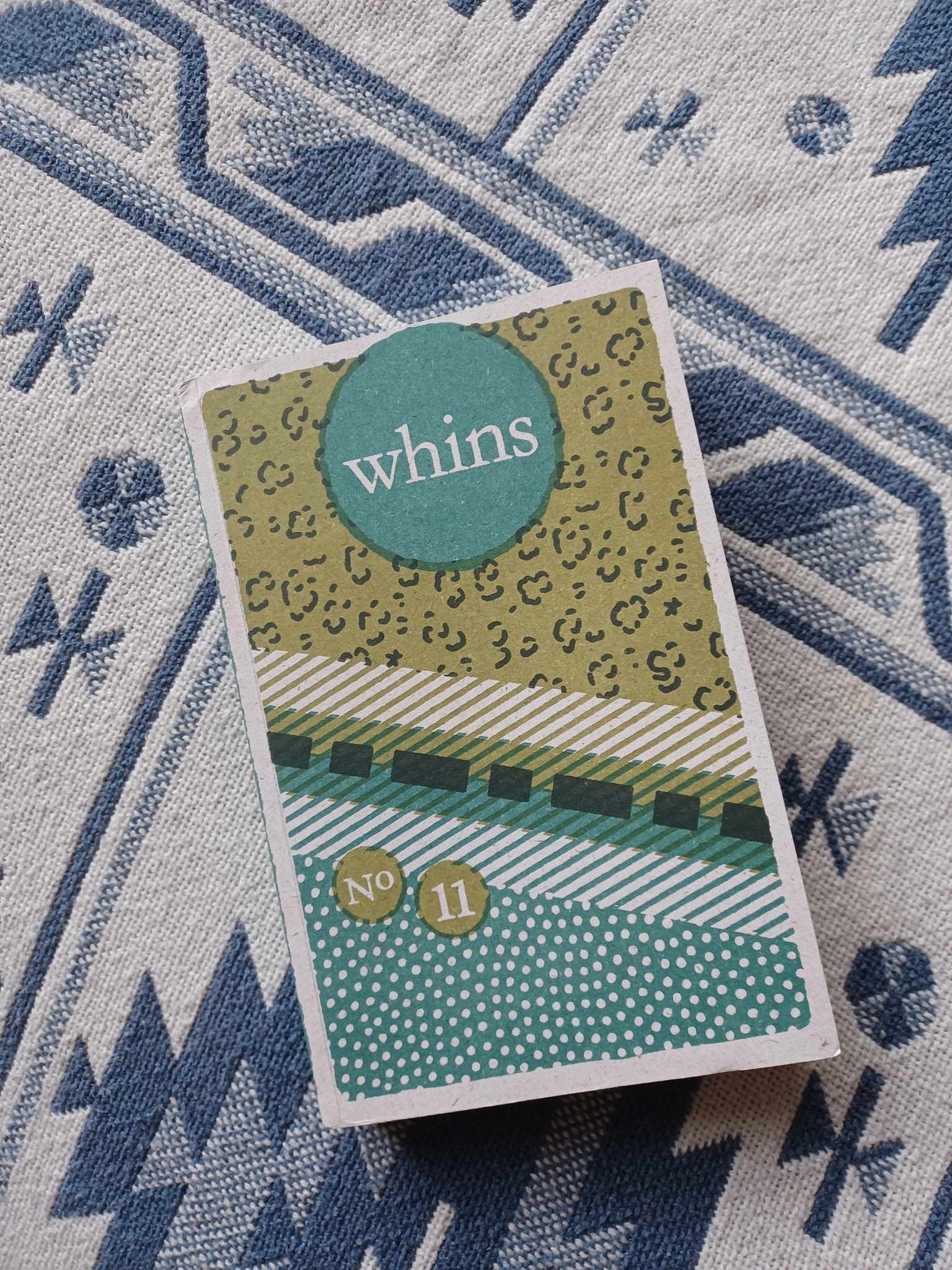
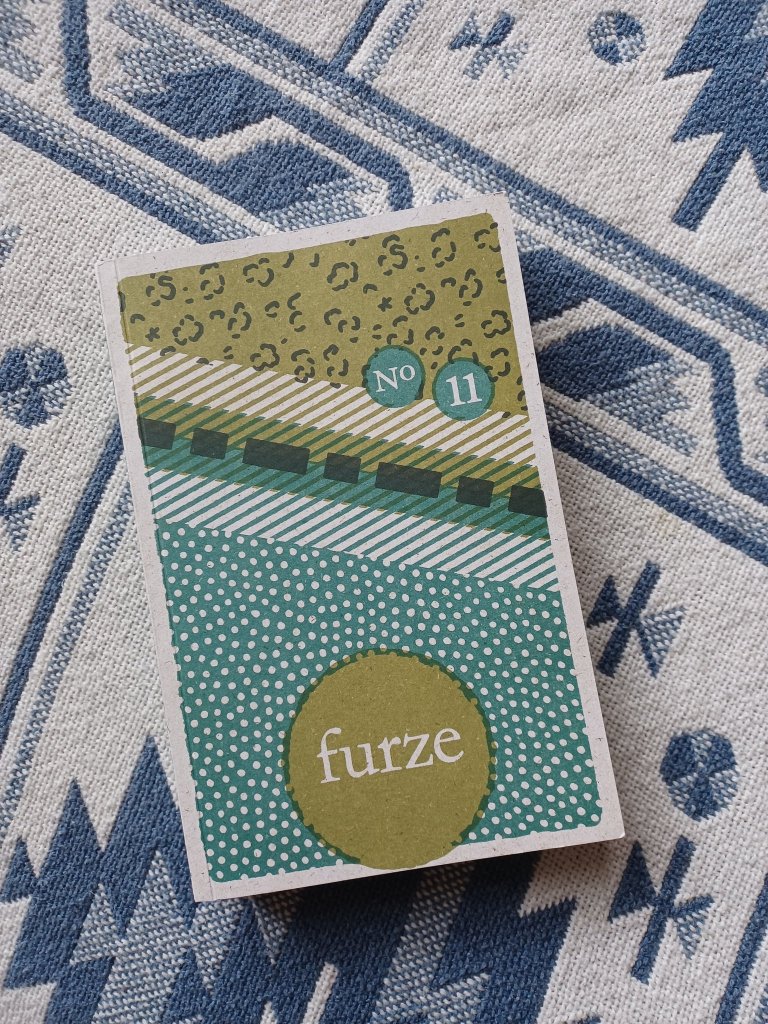
The long awaited eleventh issue of gorse just landed in my letterbox. The issue is a Têtebêche, or head-to-tail book, organised around the geographical poles of north (whins) and south (furze) and two of my poems appear in the southern realms of the issue: ‘Peckham Sketch #1’ and a long-ish sequence ‘Love and Sugar, after the military dictator’. It is beautifully designed. This explanation comes from the gorse website:

The cover shows a close up of a border division on a map, north of the line is Whins and south of the line is Furze. The two covers line up side by side to show a longer stretch of the border and they can also be arranged in an endless repeat of a divided landscape. A linguistic divide is much more ambiguous than a geo-political border, it suggests a much broader in-between and a gradual cultural blend rather than a definitive hard line.

Image shows the journal issue on the 'furze' side, laid out on a blanket

I submitted these poems and had them accepted for this issue around five years ago. I have been looking forward to seeing my work in print in this wonderful publication for a long time, but meeting these poems again after so long is also a little like reconnecting with a friend I had lost touch with.

‘She gathers them,

from among Ghana yams

and okra

as she passes a box of giant African land snails,

oozing cardboard on the pavement down Choumert Road.’

‘Peckham Sketch #1’, gorse 11

‘Peckham Sketch #1’ is a record of a walk down Peckham’s Rye Lane, and includes a loving little ode to the everyday wonder of Khan’s Bargains. The second poem, the sequence ‘Love and Sugar, after the military dictator’, is about learning a language in place, and the intimate and uncomfortable ways in which that language can become entangled with personal experience.

You can buy a copy of the issue from the gorse website here. It’s expensive, but also a thing of beauty with amazing contributions from Niven Govinden, SJ Fowler and Rike Scheffler, and Darran Anderson.

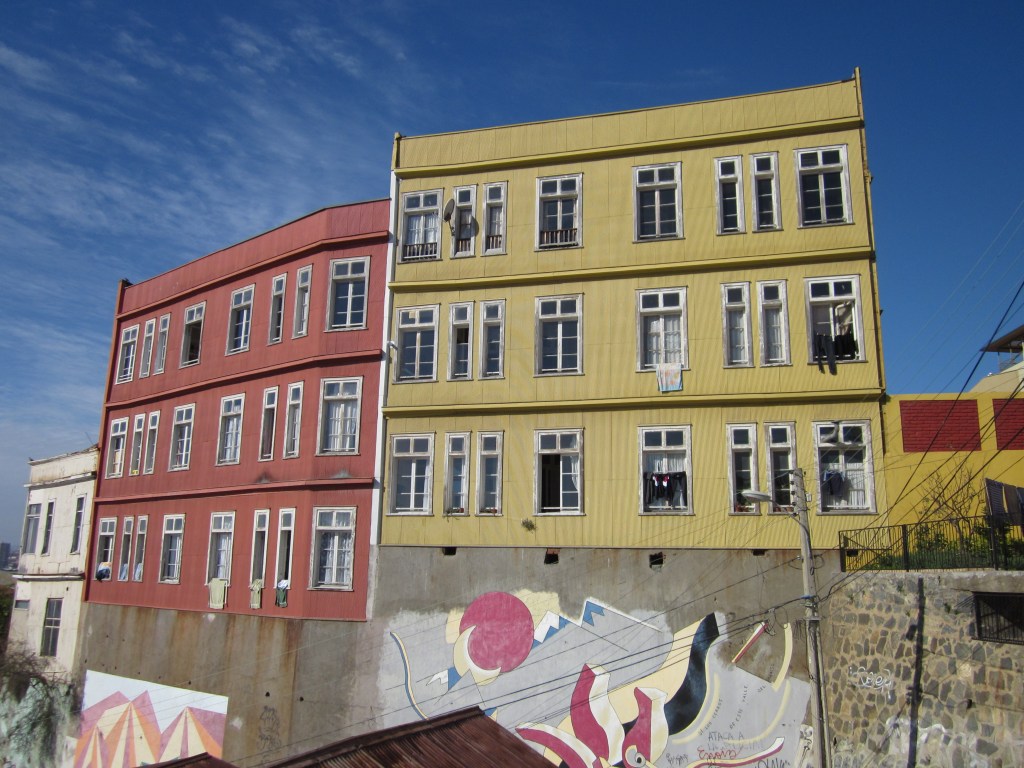
Picture shows a street in Valparaiso, Chile.
A street in Valparaiso, Chile

Scrapbooking Old English with Edwin Morgan

I spent March in Glasgow for a Research Fellowship with the Archives and Special Collections of the University Library, long delayed from 2020 because of the pandemic. I had been dreaming of Glasgow for a long time, often through the poetry of Scots Makar and Glasgow Laureate Edwin Morgan, whose archive my fellowship research was focused on.

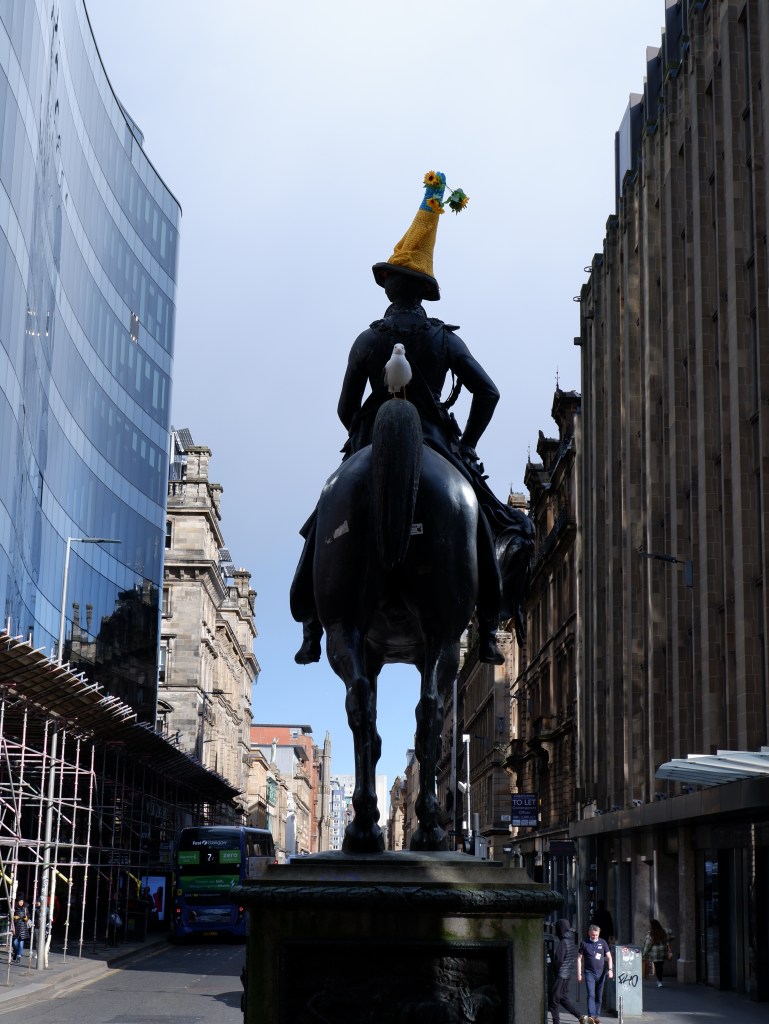
Glasgow’s iconic Duke of Wellington statue with a cone on his head, and a seagull on the horse’s rear. The cone is yarn-bombed with the colours of the Ukrainian flag.

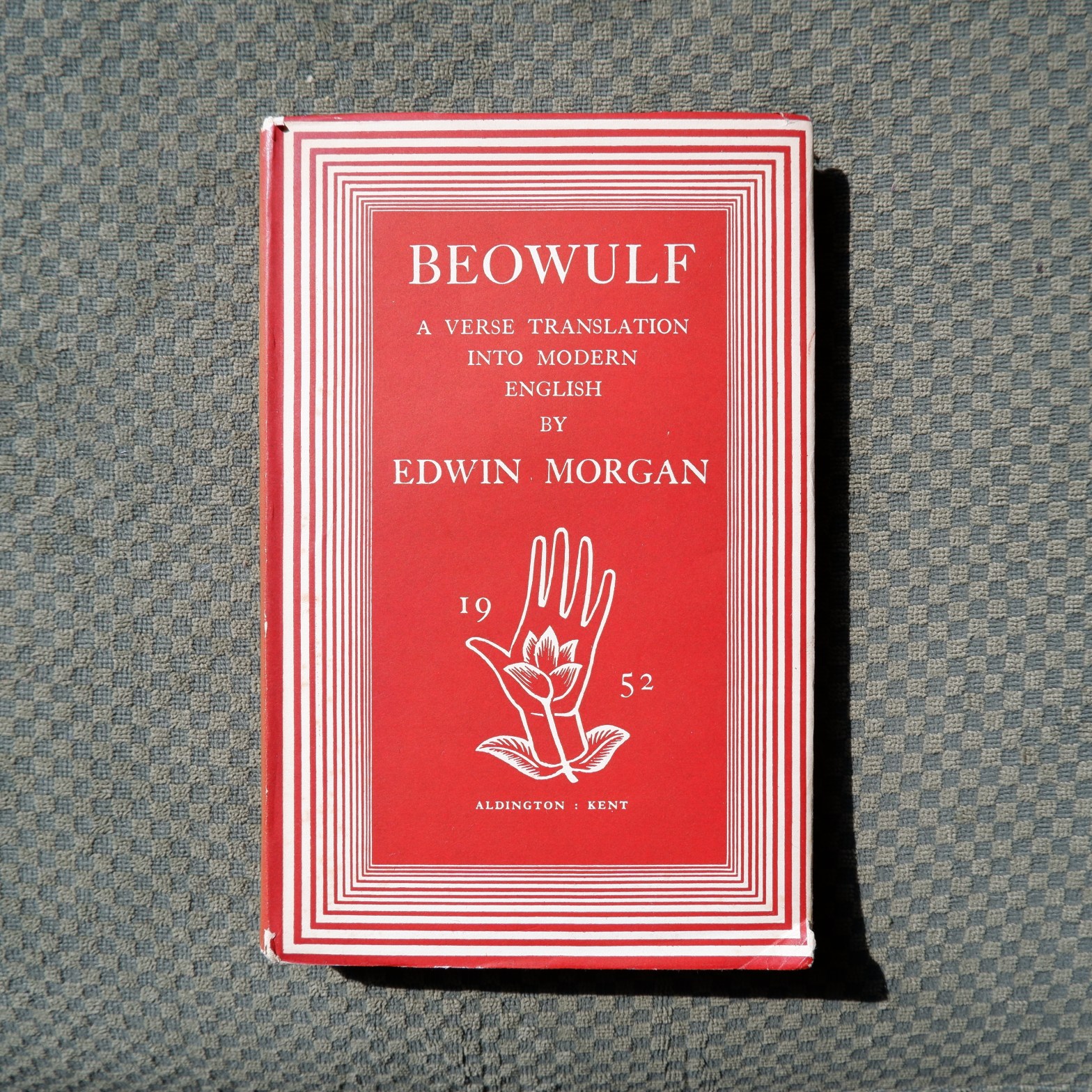
This week the Library published a blogpost that I wrote about my work with Morgan’s ‘vast, unruly and magnificent’ scrapbooks and their relationship to the early medieval poetry, such as Beowulf, that Morgan was translating in the early part of his career.

[In the scrapbooks] medieval fragments jostle for space alongside pictures of jellyfish, sea anemones and goose barnacles, photographs of blasted snow-bound mountains, or surreptitious allusions to queer desire, as well as news items about cosmic rays and potential radio transmissions intercepted from outer space.

Scrapbooking old english – ‘the nerves must sometimes tingle and the skin flush’
MS Morgan C/1 p225-226 – this double-page spread shows a print of a jellyfish facing a panel from the early medieval Franks Casket

Putting together the blogpost and going back over my research notes made me realise just how much I had to say about Morgan’s scrapbooks. If Morgan’s desire for his translations of medieval texts was that ‘the nerves must sometimes tingle and the skin flush’, this had certainly been the effect on me of the visio-verbal scrapbooks and collages. Perhaps I will try and find another venue to write about the inspiration my research with Morgan provided for my own evening collage sessions in Glasgow.

One of the collages I produced while staying in Glasgow and working with the archive.